Archive for the ‘Uncategorized’ Category

The Book of Hope

Posted: April 12, 2020 in Uncategorized

I’m on a journey to discover more about hope. There’s very little that’s familiar about the world in which we live right now, and I think everyone needs hope more than ever.

But how do find hope? I went to buy petrol for my car the other day and was delighted that fuel prices are down. A great reason to feel hopeful. With industry closing down and people using less cars, I’m told the levels of carbon dioxide in the air are decreasing.  Could that be good for our planet? Perhaps a reason to feel hopeful?

I read the other day that there are all sorts of stories on social media about animals moving into cities, finding their place that have been deserted by humans who have gone into isolation. Hopeful? Well, apparently most of those stories were fake news.  You see people try to drum up hopefulness, and they’ll even tell porkies to try and make people feel hopeful.

So there’s got to be a better way. My search for hope has been centred on the Bible and I’m astounded at the amount of hopefulness that is present in the Bible.  I was reading a passage that talks about our need to help people do what is right and to build them up in their relationship with God, and the passage concludes like this:

And the Scriptures give us hope and encouragement as we wait patiently for God’s promises to be fulfilled.

The very purpose of the Scriptures, another word for the Bible, is to give us hope and encouragement as we wait for God’s promises to be fulfilled.

Don’t you just love it that all those meetings that were in your calendar have all been cancelled? And perhaps you’re thinking to yourself right now that maybe there’s something else you can do to put this time of isolation and social-distancing to good use. 

I’d like to suggest you take the time to read the Bible.  I know there’s some bits in there that are hard to understand, but if the purpose of the Scriptures is to give us hope and encouragement, take the opportunity to specifically look for hope and encouragement as you read.

I love the Psalms, right in the middle of the Bible, because although they sometimes express hardship and doubt and even fear, they are expressing life as it really is. But almost inevitably the writers to the Psalms, after they have had a whinge about God, and their enemies, and their own doubts, they focus back on God, and his beauty and majesty; they talk about his love and grace, his generosity, and his hopefulness. 

Here’s an example: Unfailing love and truth have met together. Righteousness and peace have kissed! Truth springs up from the earth, and righteousness smiles down from heaven. Yes, the Lord pours down his blessings. Our land will yield its bountiful harvest. Righteousness goes as a herald before him,preparing the way for his steps.

The Bible is a source of hope. Take this opportunity when the busy-ness of life is on hold to a certain degree, to read the Bible. In fact this is a great time to develop a habit of reading the Bible every day. Set aside a time each day when you can read the Bible and explore what it says about hope.

After all, it says itself that the Scriptures give us hope and encouragement as we wait patiently for God’s promises to be fulfilled.

Eager Expectation

Posted: April 8, 2020 in Uncategorized
Photo: Monarch Butterfly – butterfly-conservation.org

I’m on a journey to discover more about hope. One of my favourite stories is about how a caterpillar turns into a butterfly. When you get a chance just look online for a video of this incredible event which is known as metamorphosis. (you can find it here)

I can’t explain exactly what happens to the caterpillar, but there comes a time when the butterfly begins to emerge from the cocoon. And when you’re watching it’s an incredibly frustrating process. You really want to help the poor butterfly get out of this messy prison that it seems to be in. But the reality is that it needs to go through this incredibly complex and frustrating process, so that it it will emerge whole, as a beautiful butterfly. 

In my journey to discover ideas about hope I came across this verse in the Bible that says this: I consider that our present sufferings are not worth comparing with the glory that will be revealed in us.For the creation waits in eager expectation for the children of God to be revealed.For the creation was subjected to frustration, not by its own choice, but by the will of the one who subjected it, in hopethat the creation itself will be liberated from its bondage to decay and brought into the freedom and glory of the children of God.

It seems that right now throughout the world, we’re becoming more aware of this idea that creation is in bondage to decay, the words that are used in the Bible. Whether it’s climate change, pandemics, bushfires, floods and drought, or wars and famines, there’s a lot of decay occurring all around us.

The person who wrote this passage that we now read in the Bible may have been writing a couple of thousand years ago, but he could have been seeing something that was going to happen well into the future. I get it, and I suspect you do, when we read the phrase, that creation was subject to frustration.

Butterfly life cycle: Shutterstock

It’s like the process of metamorphosis. For that butterfly to emerge as a beautiful creature that flitters around from flower to flower, brightening up our day, it has to go through a time of frustration. 

And maybe creation needs to go through a time of frustration as we prepare for something better. The Biblical writer referred to hope: He talked about creation being subjected to frustration, then added that this frustration occurred in hope that the creation itself will be liberated from its bondage to decay and brought into the freedom and glory of the children of God.

So there’s hope, not just for us, but for the whole of creation. There’s hope because God’s got things under control. Just as I would like to reach down and help the butterfly out of its cocoon while its struggling to develop its wings and emerge in all its beauty, I suspect there are times God would like to step in and sort out the mess that we’ve made. And I’m sure many of us wish God would step in and sort out the mess.

But for our good, perhaps God is allowing his creation, including us, to go through a time of frustration, so that we can learn more about him, and that, in time, we can emerge, like a butterfly, from this time of frustration and decay, fully developed, brought into the freedom and glory of the children of God. 

Join me each week as I take you on the journey to hope. You can also hear these on 98.5 Sonshine fm.

Pearls of Hope

Posted: April 5, 2020 in Uncategorized
Photo: Rob Douglas

When the world’s messed up there’s one thing you really need, and that’s hope. But how do we find hope?

Over the years many people have found the answer in a rather surprising place. 

I’ve read stories from people in all parts of the world, and at different times in history, who have found hope in this surprising place and over time they’ve been able to confirm that it was real.

Stories about people who have experienced illnesses and in their suffering they have found hope when everyone around them seemed to be giving up hope. Stories about people who have found hope during times of war when they didn’t know if they’d get back home to see their loved ones. Stories about people who have suffered in concentration camps and prisons and on the darkest of days, they have experienced hope. Stories about people who have had accidents and experienced life-changing injuries and disabilities, yet have experienced hope at the worst of times. (Check out this story of a doctor who came back to life)

It’s pretty hard to believe, but the stories are true. People have found hope during times of suffering and they have achieved that hope through their faith in Jesus.

The funny thing is – well maybe not so funny – the Bible confirms all these stories. I’m on a journey at the moment, searching the Bible to find out what it says about hope, and this is one verse that I came across:

We can rejoice, too, when we run into problems and trials, for we know that they help us develop endurance. And endurance develops strength of character, and character strengthens our confident hope of salvation.  And this hope will not lead to disappointment. For we know how dearly God loves us, because he has given us the Holy Spirit to fill our hearts with his love.

Photo: australiasnorthwest.com

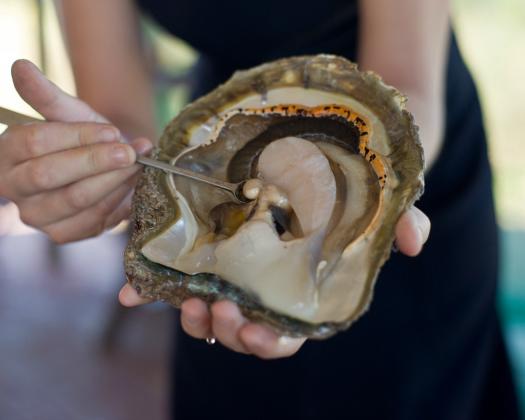
We love pearls and we are often amazed at the beauty of pearls. Natural pearls form when an irritant – usually a parasite – works its way into an oyster. As a defense mechanism, a fluid is used to coat the irritant. This coating is deposited layer upon layer until a beautiful pearls is formed. 

I think we’ve got a great picture here of suffering and how to deal with it. To start with it’s not a pleasant thing, and it actually seems to be incompatible with a good life. But various layers are developed over that suffering. According to the Biblical writer, suffering produces endurance, the next layer that grows over endurance is strength of character.  Then over this layer is another layer which is described as hope. And hope, we’re told, doesn’t lead to disappointment.

I reckon it’s also possible to cover suffering with a whole lot of other layers that don’t lead to the production of that pearl of hope. To that initial irritant of suffering, we can add layers of fear, anxiety, regret and guilt. And the final result is not nice.

For us to become pearls of hope that will brighten the lives of the people around us, requires us to allow the love of God to fill our hearts and to begin to change us from the inside out. To take the irritant of suffering and to add those layers of endurance and strength of character.

These are times when we need hope and we need more people to become pearls of hope that will enhance and brighten the lives of the people around us.  

Check out my previous blogs on Journey to Hope here and here. You can also hear them on 98.5 Sonshine fm.  If you are looking for a 9-minute message of hope, you can also check me out on Youtube.

Peace in an App

Posted: April 1, 2020 in Uncategorized

Welcome to Rob’s Ramblings. I’ve decided to develop a series of blogs entitled Journey to Hope as a way of addressing some of the fears and uncertainty that we are currently facing in our world. I’ll be running them twice a week so I’d encourage you to check it out on a regular basis and let your friends know to read it as well. For those who live in Western Australia, these blogs can also be heard on 98.5 Sonshine Radio.

When things are tough there are many places you can go to find hope. Some find hope in music, poetry or literature, while others find it in a bottle. I reckon the most hopeful place to look is in the Bible. That’s right the Bible, that old book that God botherers seem to go on about all the time.

I’m on a journey at the moment, and I’d like you to join me. I’m looking for hope and I’ve decided to see what the Bible says about hope. Here’s a verse I came across. It says this: Therefore, since we have been made right in God’s sight by faith, we have peace with God because of what Jesus Christ our Lord has done for us. Because of our faith, Christ has brought us into this place of undeserved privilege where we now stand, and we boast in the hope of the glory of God. Some translations put it this way: We confidently and joyfully look forward to sharing God’s glory. 

If you’re looking for peace, one of the options is to download an app. There’s a bundle of them. Peaceful music to help you go to sleep, deep relaxation and mindfulness apps, happy mind guides, stress relief and heaps more. But the Bible talks about being at peace with God.

What’s that you ask? Peace with God – what do you mean?

Well, we all have built into us, the ability to connect with God in some way. It’s kind of a God meter that many of us don’t even realise is there.  But when this God meter is out of sync all sorts of things can go wrong. We may doubt that God exists, or we may just have the sense that we’re not really connecting with God.

To put it simply we are not at peace with God. In fact, we’re probably arguing with him, resisting him, or simply trying our best to ignore God.

The verse I quoted says that we can have peace with God, and it’s made possible by what Jesus Christ has done for us.  Then it goes on to say that when we have that peace we can also have hope. We can confidently and joyfully look forward to living at peace with God for the rest of our lives … and for that matter, even beyond our death.

You can sit and listen to relaxation music all day, but when the kids start whingeing about the amount of screen time you’ve allocated them and other pressures are crowding in, it seems that peace is a long way off.

So there’s got to be a better way of discovering peace. The thing is, it’s not something that we can achieve by downloading an app, or having another drink, or reading more poetry. Peace with God is achieved through what Jesus Christ has done for us.

What did he do?

  1. Well he came to earth and set up camp here with us. He needed to prove that he’s not as distant as you think he is.
  2. Then he died to show just how far he was prepared to go to fix up the mess that we’d made.
  3. Then he came to life again to show that when he talked about eternal life he really meant what he said.

Being at peace with God doesn’t just help us cope with the here and now, it gives hope for the future … and that helps us cope with the here and now.

Overflowing Hope

Posted: March 29, 2020 in Uncategorized
Tags: ,
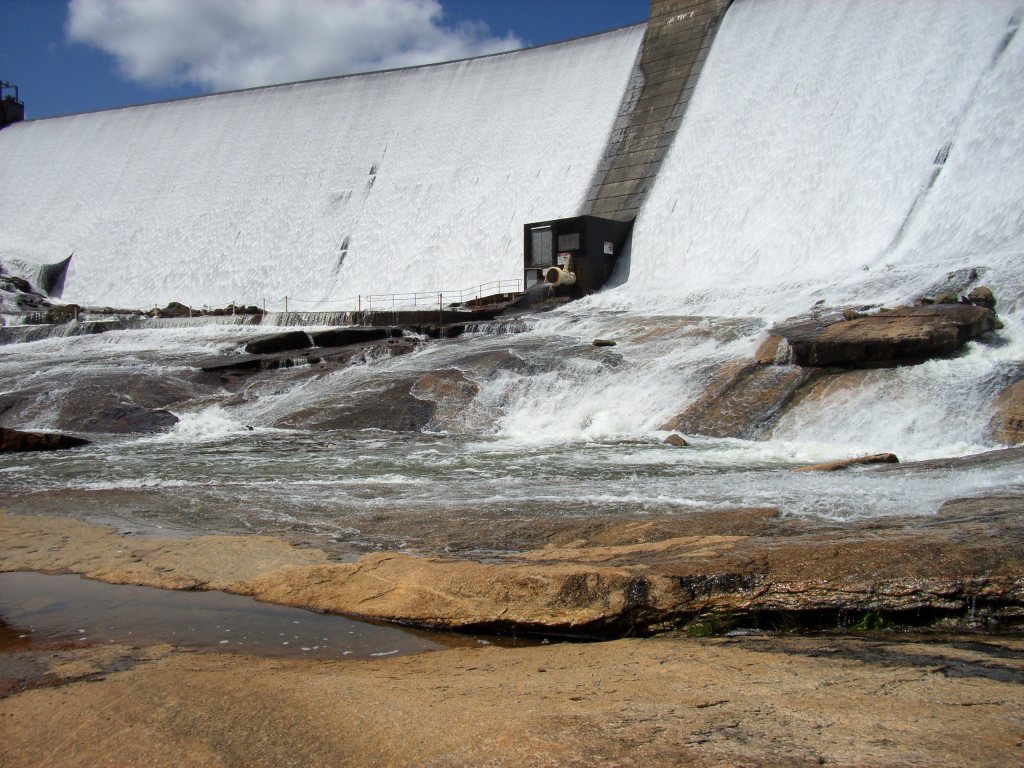
Wellington Dam, Western Australia

Seeing dams overflowing isn’t an everyday experience but many of us would have good memories of having seen Mundaring Weir overflowing, or perhaps Wellington Dam down near Collie, or even places like Churchman Brook, Serpentine Dam or Argyle Dam in the north west. 

What an incredible sight it is to see the dam full of water, and as the water overflows the roar of that water is quite amazing. One of the aspects of watching a dam overflow is to see the way in which the water is released and spreading out into the rivers and creeks that seem to spring out of nowhere.

Wellington Dam, Western Australia

I’ve started a journey to discover more about hope and I’d like to invite you to join me in this journey. I’ll probably be blogging on Sunday and Wednesday . I’ve been working my way through the Bible to discover what it has to say about hope and I can’t get over how much hopefulness is expressed in the Bible. Here’s a verse that I came across.

I pray that God, the source of hope, will fill you completely with joy and peace because you trust in him. Then you will overflow with confident hope through the power of the Holy Spirit.

As I read that verse I can’t help but think about those dams overflowing, the roar of the water, and the freedom that is associated with the water finding a place of escape from the boundaries that have been holding it in place.

But it’s talking about hope. For some people hope is like a dry creek bed. We can see the evidence of hope. There used to be a creek or a river here once, but because of the drought it’s been a long time coming. When we live in difficult times, the sense of hope can dry up and it’s only a distant memory.

But the Bible shares a prayer that the dry creek bed of hopelessness and doubt and fear, will once again flow with hope.  The prayer, which is one that I think we can all practice praying says: I pray that God, the source of hope fill you completely with joy and peace because you trust in him. Then you will overflow with confident hope by the power of the Holy Spirit.

The source of hope is God and the expectation of this prayer is that we will trust in this God of hope. Sure you may be experiencing a dry creek bed at the moment and you’re not sure who to trust, and to be fair, there are probably some people you thought you could trust who have let you down. But as you look at that dry creek bed, be reminded that it used to run, and it will run again.

If you’re not used to praying, or you’ve found it hard to pray in the past, this is a great time to start again. It’s a time to pray to the God the source of hope. A God who is trustworthy and dependable.

I’d like to invite you to pray that we together as a society will see God’s hope filling our lives and overflowing so that not only are we filled and overflowing with hope, but that the overflow will impact the lives of people around us.

Please join me in these blogs on a regular basis and share them with your friends. If you’re in Western Australia you can also hear them on 98.5 Sonshine FM. You can also check out their website for more valuable information.

Journey to Hope

Posted: March 27, 2020 in Uncategorized

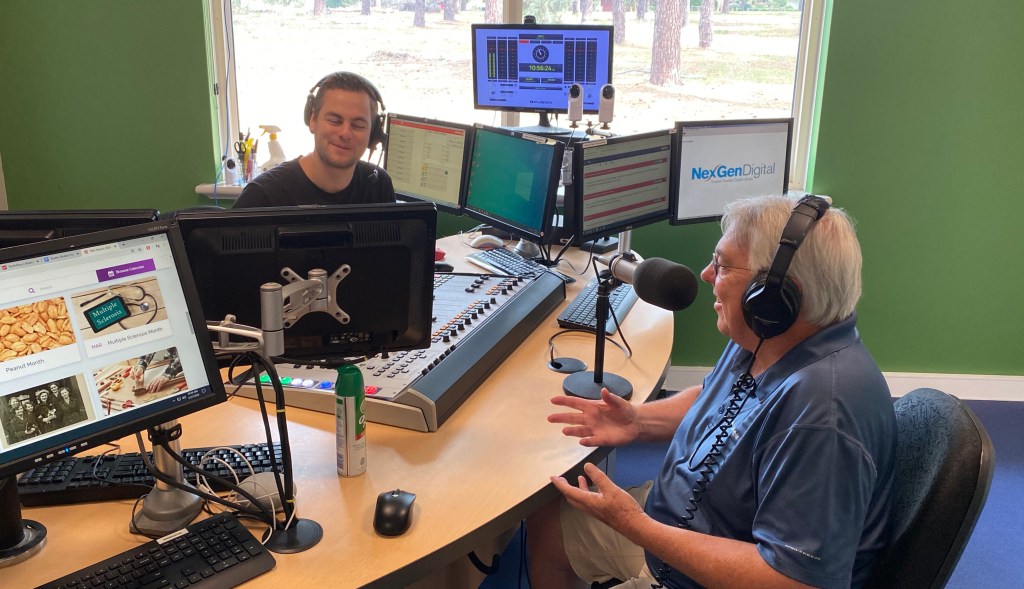
Jeziel Anderson and Yours Truly at 98.5 Sonshine fm

I have just been to Sonshine fm 98.5 to record a series of three minute spots about “hope” that will be broadcast on radio over Sonshine fm. This is a great radio station, based in Perth Western Australia that is providing uplifting radio to West Australians and I’d encourage those who are able to tune in. From Sunday I will be running these spots on this blog site each Sunday and Wednesday, so look out for them. I’m calling the series Journey to Hope as I explore what the Bible says about hope. Look forward to sharing this with you. By the way, you can check out Sonshine’s website here.

A Beautiful Day

Posted: January 24, 2020 in Uncategorized
Tom Hanks and Matthew Rhys in “A Beautiful Day in the Neighbourhood”.

In an age when we could do with more kindness and space to think and reflect, along comes the latest Tom Hanks movie, “A Beautiful Day in the Neighbourhood”.

The movie introduces us Australians to a character who is obviously well known in the US, Fred Rogers, the much-loved host of children’s television programme, Mister Rogers’ Neighbourhood, which ran from 1968 to 2001.

Investigative journalist, Lloyd Vogel (Matthew Rhys) is sent on an assignment to write a 400 word piece on Rogers (played by Tom Hanks) for a feature article on local heroes.

During the assignment Vogel discovers himself, addresses issues with his father, and sorts out a number of family relationships as a result of meeting with Mr Rogers. Anger, forgiveness, and death are also addressed in a gentle and authentic manner.


Anything that’s human is mentionable, and anything that is mentionable can be more manageable.

Fred Rogers

It is rare to watch a movie that not only challenges self-reflection on the part of the viewer, but also provides periods of silence when that self-reflection can occur. Tom Hanks as Mr Rogers has a wonderful way of bringing the viewer into his interactions with the journalist, and turning the cinema into a giant therapy session (in the nicest possible way).

It is also rare in our fast-paced secular society, to see a focus on prayer at the heart of restoring family relationships.

A Beautiful Day in the Neighbourhood is a must-watch for counsellors, pastors and others in the caring profession, but is a movie that needs to be seen by anyone who wants to find themselves part of a gentler, kinder and more meaningful world.

Vale Myrtle Yarran

Posted: April 6, 2019 in Uncategorized

I would like to give thanks to God for the life of Myrtle Yarran who is being farewelled in a memorial service this week . It was a privilege to meet Myrtle some years ago for the first time, and to realise the close link there has been between her family and mine. 

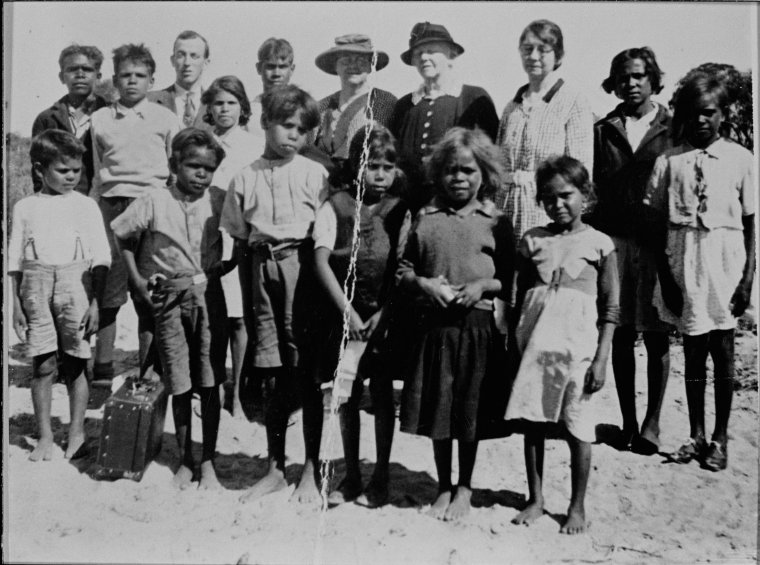
Just a few days before she died, I visited Myrtle in Armadale Hospital and prayed with her and read the Scriptures. I also gave her two photographs. One of my mother holding Myrtle as a baby, and another of a group of school children, including Myrtle and my father who was her school teacher at the time. 

Beth Douglas (nee Weir) with Myrtle Yarran (nee Mead)

My Dad, Wilf Douglas, and my mum, Beth Weir, both lived and worked at the tiny wheatbelt railway siding town of Badjaling when they were single missionaries, but later married and worked there again as a married couple.

When Dad first went to Badjaling in 1938 as a 21-year-old man he was given the job of being the school teacher although he had never been to high school himself. Myrtle was one of his students. He had come out from Belfast as a child and sent away from his parents to Fairbridge Farm School, so he came to Badjaling with his own personal experience of a stolen generation. 

Wilf Douglas (back row third from left) and Myrtle Mead (front row, second from right)

Badjaling and the people there including the Meads, Yarrans, Garletts,  Winmars and Granny McKay became his family, Myrtle’s dad Bob Mead was one of the first people that Dad met and he taught dad his first Noongar words, as well as introducing him to Noongar culture.

This was to be the start of a life-long journey by my dad, learning Aboriginal languages around Australia and documenting them for future generations. 

Thankyou Myrtle, for the the wonderful influence you have had on both our families over so many years.

Indigenous Languages Initiative

Posted: January 8, 2019 in Uncategorized

iyil-logo

It’s not uncommon to hear criticism of Christian missionaries for their patriarchal approach to indigenous people.

However, in this International Year of Indigenous Languages it is significant that the work of at least one pioneer missionary in Australia will be recognised.

The National Library of Australia has commenced a project as part of the International Year to digitise some important books on Aboriginal languages, including a number produced by veteran missionary-linguist, Wilf Douglas.

Works will include dictionaries and word books from as far back as 1954 in the Western Desert language of Warburton Ranges, the Bardi language of Sunday Island and the Noongar language of the south west of Western Australia. 

Few people have contributed as much to the knowledge of Australian Aboriginal languages and their protection from potential extinction through the development of dictionaries and grammars for previously unwritten languages.

Congratulations to the National Library of Australia for embarking on this significant project in the International Year of Indigenous People. 

Come Eat With Me… An excerpt

Posted: December 28, 2018 in Uncategorized

Following is an excerpt from one of the early chapters in my new book, Come Eat With Me. The book will be on shelves and online very soon. 

The Bible starts with a great picture of God preparing the table, placing the first people in a garden where everything is beautiful. but within a short time, they have come across a challenge. They are given a choice about eating some fruit from a single tree, and the suggestion that is put into their minds by the snake is that eating of the fruit will give them knowledge about the difference between good and evil.

Prior to that, everything was good and life was pretty simple. I think we’d all like that kind of life, and joining God’s community on earth would be pretty cozy if we didn’t have to worry about choices between good and evil. but the choice the first people made had immediate consequences, and it was their own family that suffered from their decision.

it’s interesting that the story about the sons of the first people involved a meal. Abel was a sheep farmer and was very proud of the way he cared for his flock and was able to develop exciting new methods of animal husbandry. His brother Cain was a farmer and he was equally proud of his ability to grow crops that would produce delicious food.

I can imagine the day Cain harvested one of his early crops, and successfully developed the process of baking a loaf of bread. He invited Abel to kill a sheep, and together, with all their families, gathered in great excitement to eat a meal together. What a time of celebration that would have been. But perhaps the happy families weren’t as happy as it seemed on the surface.

Cain, it would seem, was jealous of his brother. Perhaps it was because the family liked the roast lamb and found the bread a little dry without any butter and jam which, by the way, hadn’t yet been invented. Certainly, the decision of Cain’s parents to explore the idea of understanding good and evil was starting to work its way into Cain’s psyche.

In recognition of God and as an expression of thanks to him, Cain and Abel each brought a portion of their produce and made an offering to God. But there was a problem. We’re only into the fourth chapter of the bible and we’re told that God who has invited us to come and eat with him rejects Cain’s offering, and in a jealous rage, Cain kills his brother.

Why did God reject Cain’s offering? it wasn’t anything to do with the quality of his produce, but more to do with what was lurking in Cain’s heart. As we work our way through this book we will make an exciting discovery. The evil that was crouching at the door of Cain’s heart prompting him towards jealousy and then murder, was to follow humanity for the rest of time.

When Cain brought his gift of grain to God, it was not done in a spirit of thanksgiving and love, but, I would suggest, was a process of institutionalizing the act of worship. The act of bringing an offering wasn’t a genuine response from the heart, but the act of someone who was doing what they thought needed to be done.

Why did God reject Cain’s offering? Hold that question for a while, because the vast story of the Bible is all about the answer to that question. Over time we will discover in the stories about God’s invitation to eat with him, that the evil that lies deep within will continue to disrupt many potentially beautiful meals, but in the long run a solution is at hand.