I just love it when a plan comes together … and you haven’t even planned it.

Last Sunday night, channel 7’s Sunday Night programme featured the world record attempt by Internet sensations, How Ridiculous, in sinking a basketball a distance of 126.5m from the top of the Gordon Dam in Tasmania. I particularly loved it because Brett, who got the record shot, will be a guest at our Fun Factory in a couple of weeks’ time.

Heroes is the theme of Fun Factory which is Maida Vale Baptist Church’s annual school holiday event for kids from four-year-old kindy right through to year 6. We’re going to have a few guests who will help us with our heroes theme. How Ridiculous have used their ridiculous fame to support Compassion Australia, and that’s part of what we are hoping to get across to kids at Fun Factory.  We can all be heroes when we use what God has given us to help others.

Thanks Brett and the How Ridiculous team.

Check out the video of the Guinness World Record shot:

milky-way_karijini_western-australia_kellie-netherwoodI’ve done my fair share of camping in my time.

I remember laying on my back somewhere in the north west of Western Australia, gazing up at the night sky. Without the distraction of city lights the Milky Way becomes a living thing. It’s no longer a dark place, but a place where myriad lights fill every corner.

Then there are memories of camping on the banks of the Mary River in the Kimberley, shining a torch along the opposite bank to catch the glint of crocodile eyes. The worst part of camping is arriving at your camping place late after a long drive and having to put up the tent in the near-dark.

Isaiah 54 has nothing to do with camping, but it takes the readers thoughts back to the patriarchs like Abraham who lived in tents permanently – not just on holidays. Abraham was called to leave his home and move to a new country that God had planned for him. Similarly, Isaiah calls on the church to reach beyond the familiar:

“Enlarge the place of your tent, stretch your tent curtains wide, do not hold back; lengthen your cords, strengthen your stakes.

This morning in church I shared this as a call to the 21st century church. At a time when many people are expressing fear about the future of the church, I don’t believe it’s time to circle the wagons. Rather, I believe we need to hear the word of the Lord to Abraham and to Isaiah, to enlarge the place of our tent.

As a local church, we are calling on God to show us what that may mean. For me it certainly means we need to stop looking for the glint of crocodile eyes. Instead we need to look at the Milky Way and be reminded again of the majesty of God.

Lord, our Lord, how majestic is your name in all the earth! You have set your glory in the heavens. Through the praise of children and infants you have established a stronghold against your enemies, to silence the foe and the avenger.  When I consider your heavens, the work of your fingers, the moon and the stars, which you have set in place, what is mankind that you are mindful of them, human beings that you care for them?  You have made them a little lower than the angels and crowned them with glory and honor. You made them rulers over the works of your hands;  you put everything under their feet:  all flocks and herds, and the animals of the wild, the birds in the sky, and the fish in the sea, all that swim the paths of the seas.  Lord, our Lord, how majestic is your name in all the earth! Psalm 8

DSC01573When we began our cruise of the Greek Islands last year one of the first words our guide taught us to say was efharistó, or thankyou. “Greeks love it when you say efharistó,” the guide said. The response we were told would always be parakaló, you’re welcome. Sure enough I found many opportunities to say efharistó to tour guides, waitpersons, bus drivers, shopkeepers and others and I was delighted that whenever I said efharistó, the response would always be parakaló.

I found something refreshing about using a word that was understood in a country far from home, and to have it acknowledged straight away. But perhaps even more important than that was the fact that the word I used the most was a word that focussed on the person to whom it was being addressed, not on myself.

Soon after being introduced to the word efharistó I drew on my basic knowledge of Biblical Greek and noticed straight away that embedded in the word efharistó, was the word charis, which means grace. This gave me a fresh appreciation of the way in which “thankyou” recognised an act of grace and at the same time was a symbol of grace.

In a society where entitlement has replaced thanksgiving the idea that thanks is an act of grace is quite important. When we go to a restaurant we pay our money and if the food or the service is not up to our standard we are more likely to express our lack of appreciation than to say thankyou. We have paid for something and are therefore entitled to a certain standard. Entitlement shows itself in many forms and sadly thanksgiving has been overtaken in many common situations.

May 30 is National Thanksgiving Day in Australia and it’s a great time to pause and reflect on the importance of saying thankyou to God and to the people who live around us. Even if we think that people don’t deserve it, saying thankyou is a powerful act of grace and we need to say it more.

Efharistó. Thankyou for reading this blog and for giving thought to these simple words.

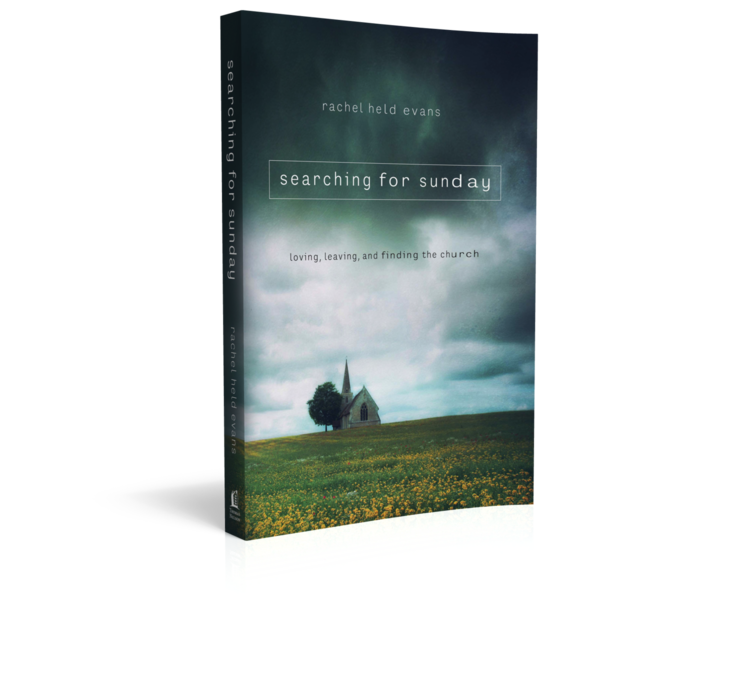
static1.squarespace.comI have been reading Rachel Held Evans’ blogs for a couple of years and have found them, at various times, challenging, frustrating, refreshing, and uplifting. So it was with a sense of anticipation that I bought her new book, Searching for Sunday.

In her very personal blog, Evans shared her spiritual journey, including her frustrations, anger and disappointment with the organisational church and how that impacted her relationship with God and with fellow Christians. With that background I was anticipating Searching for Sunday to be a criticism of evangelicalism and an opportunity to deconstruct the church.

However, the opposite was true. The hurt that led her out of the evangelical denomination she had grown up in was still evident, but over and above this was the deep sense of joy that arose out of discovering that God was still deeply in love with a church that was marred and broken, but inexpressibly able to represent his grace.

While I still find some of Evans’ discoveries quite challenging, I can’t help but be delighted at the way this book shows that even the greatest hurts and disappointments can be healed in Jesus. Anyone who has been disappointed, hurt or damaged by the church should find this book a breath of fresh air.

If the church is like a body, like a bride, Evans says, then its worth looking in the mirror:

This is the church. Here she is. Lovely, irregular, sometimes sick and sometimes well. This is the body-like-no-other that God has shaped and placed in the world. Jesus lives here; this is his soul’s address. There is a lot to be thankful for, all things considered. She has taken a beating, the church. Every day she meets the gates of hell and she prevails. Every day she serves, stumbles, injures, and repairs. That she has healed is an underrated miracle. That she gives birth is beyond reckoning. Maybe it’s time to make peace with her. Maybe it’s time to embrace her, flawed as she is. Maybe it’s time to smile back.

RIMG0033Over a number of years I became familiar with the road between Perth and Geraldton, a 433km ribbon of bitumen bounded on both sides by, at times, thick bushland.

Every so often, a bushfire would ravish the countryside and the change in scenery from one trip to another would be noticeable.

One one occasion I stopped to look more closely at a spot that had been left black and denuded by a fierce bushfire a month or two earlier.

As I walked through an area that had once been covered in heavy undergrowth and dense bush I was confronted by the devastating effects of a fire that had left trees and bushes, and even the sand beneath my feet, black and lifeless. But as I looked closer it was clear that lifeless was not the correct word to describe this place.

Tiny green shoots were breaking through the dry sand at my feet, and splashes of bright green contrasted with the blackness of burnt tree trunks as fresh shoots pushed aside the symbols of death and reached towards the sunlight.

A few times recently I have had cause to read Psalm 23 which says, in part:

Even though I walk through the darkest valley, I will fear no evil, for you are with me; your rod and your staff, they comfort me. You prepare a table before me in the presence of my enemies. You anoint my head with oil; my cup overflows. Surely your goodness and love will follow me all the days of my life, and I will dwell in the house of the Lord forever.

Whatever dark valley I go through the promise of God’s Word is that the fresh green shoots of God’s love and grace will continue to push through.

Even in the presence of enemies the table of grace will be prepared for me. Whether those enemies are people who bring fear and anguish to my life, or they are the enemies of death, disease, unemployment, loss, or poverty that bang angrily at the windows of my life, the table is still spread for me.

It is a table of life. A table that welcomes me when I don’t feel welcome in other situations. A table that offers hope and refreshment. It is a table that groans with the weight of fresh fruit, and delicious food. The contrast between the bright colours of the food and the blackness of the scenery around me is unbelievable.

On this table is the bread and wine that speaks of the overwhelming grace of One who was prepared to go through the darkest valley on my behalf.

And while I long to withdraw from this blackened place where my enemies hover in the shadows, I am drawn to this incredible table that has been set for me. Here in the presence of my enemies I experience forgiveness as I eat of the bread and drink of the wine; I can feel the oil of joy running down my head … and I know that I am at home.

He Speaks Our Language – Biography.

Growing up in a Baptist Church in Western Australia I regularly heard stories about the Baptist missionaries who went to Papua-New Guinea to serve God.

Place names like Telefomin and the Sepik River were part of my vocabulary as we heard visiting missionaries tell us stories of their work, or had reports read out at church from missionaries serving God in those places.

This morning our church service was led by the Papua-New Guinea West Australian Christian Fellowship and it was a privilege to have Alan Bong and others lead us in worship, even singing in Pidgin.

Alan told the story of a young missionary from Tasmania who went to Telefomin back in 1953 and the way in which the lives of he and his family had been influenced by this young man’s willingness to give up a successful career to bring the good news of Jesus to the people of Telefomin.

The tables have turned and now PNG Christians are in Australia sharing the good news of Jesus with their own people in this country and with Australians.

The same story could be told of many people who were influenced by Christian missionaries and in a new era of globalisation are able to return the favour.

The Centre for Global Christianity Gordon Conwell Theological Seminary in the US, has shown that there have been dramatic changes in the way the Good News of Jesus Christ is spread around the world. Countries like Brazil, South Korea and India that were once recipients of Christian missionaries are now among the countries that send the most Christian missionaries to other parts of the world. In terms of missionaries sent per million church members, Palestine, Ireland and Malta are surprising leaders.

Screen Shot 2015-05-10 at 3.43.11 pmIt was a pleasure to receive ministry from our PNG brothers and sisters this morning and to be reminded of the words of the prophet Isaiah:

As the rain and the snow
    come down from heaven,
and do not return to it
    without watering the earth
and making it bud and flourish,
    so that it yields seed for the sower and bread for the eater,
11 so is my word that goes out from my mouth:
    It will not return to me empty,
but will accomplish what I desire
    and achieve the purpose for which I sent it.

Hope Through Endurance

Posted: May 2, 2015 in Uncategorized
Tags: ,
Photo: Amul Thapa, KathmanduToday.com via AP

Photo: Amul Thapa, KathmanduToday.com via AP.

This week a photograph of 5-month-old Sonies Awal being held aloft has become a symbol of hope.

Sonies was found alive in the rubble of his family home in Muldhoka, Bhaktapur, east of the Nepalese capital, Kathmandu, 22 hours after the devastating earthquake that killed more than 6000 people and left hundreds of thousands homeless.

Amidst awful scenes of hopelessness the discovery of a baby alive lifted the spirits of many and as the pictures spread around the globe the stories of survival helped to provide hope to a world that seems to have seen more than its fair share of natural disasters.

Hope is more than just a fanciful wish that things will get better. When a nation has been devastated by an earthquake hope enables the rescuers to keep searching; to keep listening for the muffled sounds of life below the rubble. Hope enables those people in positions of responsibility to plan for life after the clean-up has been completed. Hope motivates architects, town planners and builders to design for a future that is likely to include more natural disasters, but will also see babies born, relationships blossom, dreams realised, ideas developed and creativity nurtured. Hope motivates people hundreds of thousands of kilometres away to donate funds towards relief efforts.

On the back of the door in my office I have pinned these words that relate to the way in which hope can help in the process of change for those affected by mental illness and addictions:

Hope is the limitless belief that things do not have to remain the same and that change can and does happen. It is about concentrating on strengths rather than weaknesses, focussing on the future rather than the past and celebrating small successes rather than insisting on rapid change…

The apostle Paul put it this way:

Now that we have been put right with God through faith, we have peace with God through our Lord Jesus Christ. He has brought us by faith into this experience of God’s grace, in which we now live. And so we boast of the hope we have of sharing God’s glory! We also boast of our troubles, because we know that trouble produces endurance,  endurance brings God’s approval, and his approval creates hope.  This hope does not disappoint us, for God has poured out his love into our hearts by means of the Holy Spirit, who is God’s gift to us. (Romans 5:1-5 Good News Translation)

The picture of baby Sonies in Nepal is not only a picture of hope for a nation, but a picture of God’s love for all people; a picture of hope and grace that rises out of endurance.

smithyThis week I had the opportunity to meet John Smith, the first president of the God’s Squad Motorcycle Club. We first met John about 25 years’ ago when he stayed with us at our home in Derby, so it was great to catch up with him.  At that stage John had been leading God’s Squad for about 15 years, providing a Christian presence among outlaw biker groups.

Smithy is described in his profile as an author, a social anthropologist, a business speaker, a teacher and lecturer, a biker, a defender of the poor and marginalised, a lover of blues music, a gifted evangelist, an elder of the radical discipleship movement, and a prominent social commentator. He has shared the stage with former President Jimmy Carter and has addressed the United Nations Human Rights Commission.

Despite battling cancer for about 15 years, John hasn’t stopped travelling, speaking and writing. In fact he has recently published a new book, Beyond the Myth of Self Esteem. In this book he uncovers common myths about self-esteem and explores their effects on individuals and society. He talks about the way in which the search for good self esteem and happiness has led to a cult of perfectionism.

I used to say, ‘I don’t want to talk to anyone who has not suffered because they usually have nothing to say.’ That may be overstating the case, but my experience has been that those who have encountered disappointment and tasted failure are the wiser for the experience if they rise above despair and confront their situation appropriately.

He went on to say:

If we invest our lives in creating a bubble of perfection to avoid pain, then we are heading for disillusionment. Sometimes feeling ‘bad’ or uncomfortable is the appropriate response to our circumstances; our challenge is to learn to deal with these feelings in healthy and authentic ways.

Smith argues that the western approach to self esteem has led to us thinking that the purpose of life is to find ourselves, but that there is actually something more: the search for meaning and purpose beyond ourselves. In fact, he says, the increasing focus on self has led to the diminution of the person. Smith’s many years of working with outlaw biker gangs and the poor and marginalised in many parts of the world, has led him to being convinced that self-surrender to God, not the search for self-esteem, is the ultimate means by which we find ourselves.

He concludes by saying that if anyone is motivated to explore the spiritual dimension they should include an examination of the person and teachings of Jesus Christ.

As one who long ago surrendered himself to God as revealed in Jesus, I can say that this has been the wisest, most fruitful and most fulfilling decision of my life. I have found where I truly belong. I agree with Augustine of Hippo, who some 1600 years ago summed up relationship with God in this way: “You made us for yourself and our hearts find no peace until they rest in you.”

Screen Shot 2015-04-17 at 10.05.44 amWhat influences our purchase of fashion garments? Other than how it looks, the price and the size is there anything else that will help us in making a decision. There are probably few of us who think about where our clothes have been made, the amount the manufacturer’s have been paid, or a whole range of ethical issues with the production of our clothes.
For me, the whole process of buying clothes is hard enough without having to think about the ethics of what I’m buying, but if I’m serious about following Jesus’ instructions to love my neighbour I need to think about those people who are facing incredible hardship in order to give me the privilege of going into a fancy shop to buy nice clothes … and I now have some information to help me influence the big companies that provide my clothes.
It’s been two years since the fatal factory collapse in Bangladesh, that saw the death of 1,100 factory workers. After that event Baptist World Aid produced the 2013 Australian Fashion Report to help consumers, retailers, investors and governments to know more about the people producing our clothes and how they are treated.
This week the follow-up to that report, the 2015 Australian Fashion Report was released by Baptist World Aid. You can take a look at the full report HERE. It includes an additional 18 companies representing over 91 brands and there have been some significant improvements.
Of the companies researched in our last publication, a remarkable two thirds have improved their labour rights management systems, 100% now have codes of conduct (up from 85%) and the number of companies that actively engaged with the research process has increased from 54% to 94%. Some companies that have made significant improvements include Kmart, which has released a complete list of its direct suppliers, a huge step towards transparency; The Cotton On Group, which has taken big steps forward to identify suppliers deeper in their supply chain; and H&M, Zara, Country Road and the Sussan Group which have demonstrated that they have made efforts towards paying better wages for workers overseas.
The Fairtrade companies once again are a stand out, with all their brands receiving A grades. Etiko still retains top honours, having traced its entire supply chain and taken action to ensure workers at the inputs and final stage of manufacturing levels of the supply chain are being paid a living wage. Etiko’s performance is only matched by the newcomer, Audrey Blue, who shares Etiko’s supply chain. The Cotton On Group takes honours for being the highest rated, non-Fairtrade Australian retailer, while H&M and Inditex, the two biggest fashion retailers in the world, are amongst the best rated international brands, receiving A-
grades while also taking action to ensure workers at the final stage of production are being paid above the minimum wage. Only Hanesbrands received a higher grade, an A, but has yet to demonstrate any action on improving worker wages.
But the news isn’t all good. The report tell us:

While there are promising signs for the fashion industry, the problems remain significant. Overall the industry is still categorised by poverty level wages. A mere 12% of companies could demonstrate any action towards paying wages above the legal minimum, and even then, only for part of their supply chain. Furthermore, 91% of companies still don’t know where all their cotton comes from, and 75% don’t know the source of all their fabrics and inputs. If companies don’t know how and where their products are made, then there’s no way for them to ensure that their workers are protected.

Sadly, many of the worst overall performers were iconic Australian fashion brands such as the Just Group (owner of Just Jeans, Jay Jays, Dotti, Peter Alexander and Portmans), fast retail brands like Ally, Valley Girl, Temt and Industrie, and low cost suppliers like Lowes and Best & Less. These companies have all received D or F grades. We could find little evidence that any of these fashion retailers were doing much, if anything, to protect workers overseas. Many of them had little or no publicly available information and/or didn’t respond to any of our requests to engage with the research process.
Take a look at the report and consider the consequences. Congratulations to Gershon Nimbalker and the team at Baptist World Australia who have put this report together to help us make decisions that will help the less fortunate.