DSC02298Why would you want to open a butcher shop on a bridge? For that matter why would you want to build any sort of shop on a bridge. In around the 13th Century butchers, fishmongers and tanners, in particular, began building shops on the Ponte Vecchio (Old Bridge), that crosses the Arno River in Florence.

DSC02207The shops are still there today though they are mainly jewellers and other merchants that cater to tourists. In fact, it was in 1593, when Ferdinand I decreed that only goldsmiths and jewellers were allowed to have their shops on the bridge in order to improve the well-being of people as they walked over the bridge.

While the idea of having a shop on a bridge doesn’t make a lot of sense to me, it certainly got my attention, and when we were in Florence last year I loved taking photographs of the Ponte Vecchio from a range of different angles.

DSC02200

The view on the Ponte Vecchio

It seems to me that building a shop on a bridge is something you do when you can’t make up your mind which side of the river you want to establish your business.  There are certain advantages in being one side, but there may be greater advantages on being on the other side.  Then again, what if it were on this side ….? Oh dear. I can’t decide. I’ll just build it on the bridge.

Jesus told the story about a man who built his house on a foundation of stone and when the storms came the house remained firm. He compared that with the man who built his house on the sand and it collapsed during the next storm. He said: Therefore everyone who hears these words of mine and puts them into practice is like a wise man who built his house on the rock. 

When we’re indecisive about the words of Jesus, we may as well be building our lives on a foundation of sand – or building on a bridge. Will I follow Jesus, or is that too hard? A bit of religion is OK … maybe I’ll keep my options open. I don’t need to worry too much about that till I’m older.

Building on a bridge may seem cool, but not if it’s because you’re unwilling to make the decision which side of the bridge you really belong. I made the decision that I belong on God’s side and I’m glad I’m no longer sitting on the bridge wondering if I’ve made the right decision or not.

A Precarious Life

Posted: March 15, 2015 in Europe
Tags: , ,

DSC02498 - Version 2

DSC02588If you’re out fishing, how do you identify your own house back on shore? One way is to paint your house a unique colour. That’s the story of the incredible colours that make up the villages of the Cinque Terre, situated on a rugged portion of coast on the Italian Riviera.  Cinque Terre means “The Five Lands” and comprises five villages: Monterosso al Mare, Vernazza, Corniglia, Manarola, and Riomaggiore. The coastline, including the five villages, and the surrounding hillsides are all part of the Cinque Terre National Park and is a UNESCO World Heritage Site.

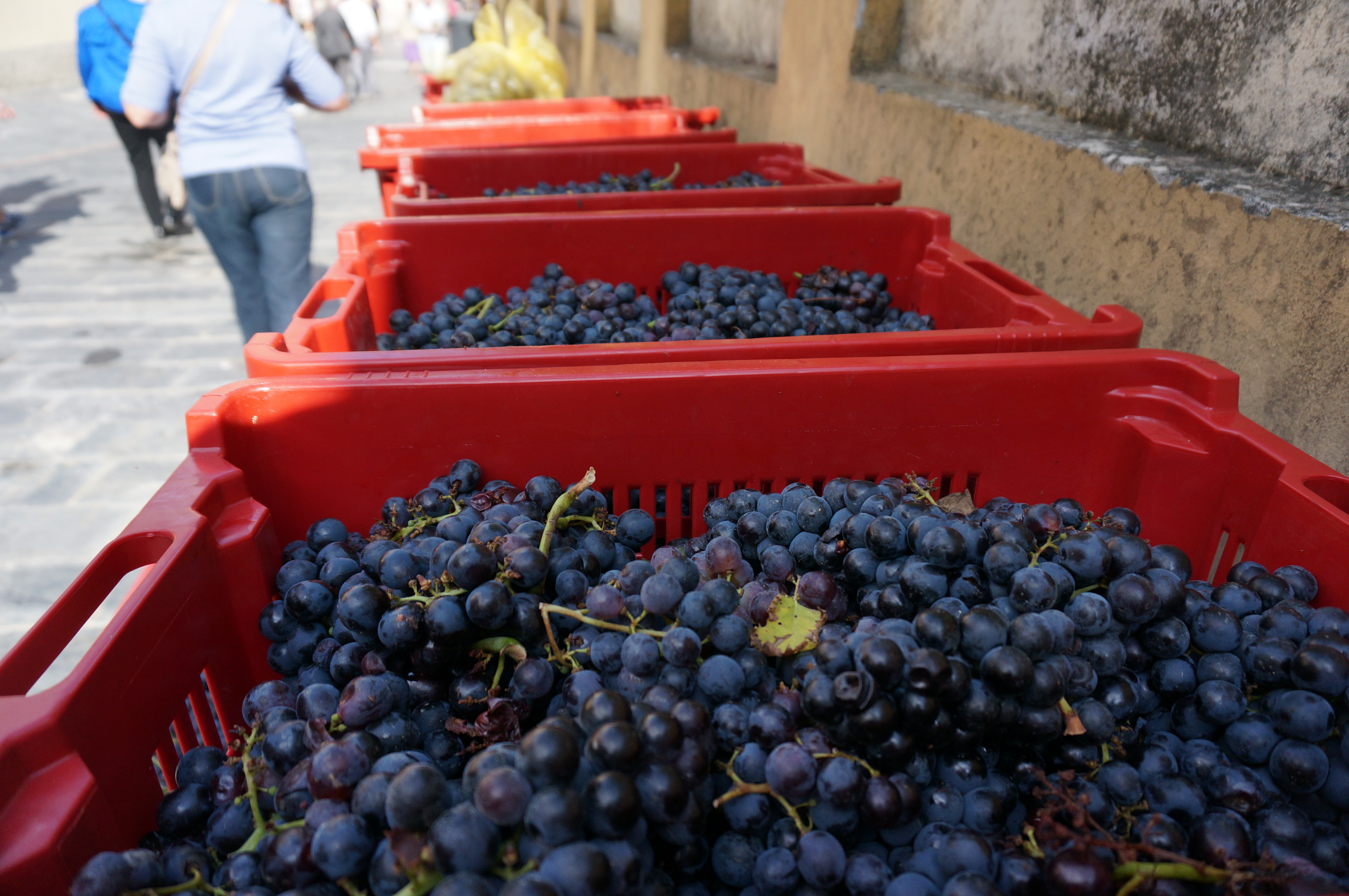
DSC02585There are many things about the villages of the Cinque Terre that are memorable including the quaint multi-coloured houses and shops, the precipitous roads we travelled to visit the villages, and the amazing scenery. But one of the things that stood out for me was the way in which the people of the village continue to live as they have done for centuries, making a living from vineyards perched high above the villages in terraced gardens.

DSC02558

The grapes of the Cinque Terre are used to produce two locally made wines, the Cinque Terre and the Sciachetrà, and all are grown on the side of rocky mountainsides that seem almost impossible to reach.Yet, for centuries the people of the Cinque Terre have maintained this lifestyle and have supported their livelihood in difficult circumstances.

For some of us, life is precarious. There are many pressures and life seems to be lived on the side of a rocky hillside. I’ve been encouraged by the Apostle Paul who described his life like this:

DSC02453

Five times I received from the Jews the forty lashes minus one.  Three times I was beaten with rods, once I was pelted with stones, three times I was shipwrecked, I spent a night and a day in the open sea, I have been constantly on the move. I have been in danger from rivers, in danger from bandits, in danger from my fellow Jews, in danger from Gentiles; in danger in the city, in danger in the country, in danger at sea; and in danger from false believers.  I have labored and toiled and have often gone without sleep; I have known hunger and thirst and have often gone without food; I have been cold and naked.  Besides everything else, I face daily the pressure of my concern for all the churches.   Who is weak, and I do not feel weak? Who is led into sin, and I do not inwardly burn?

He then went on to acknowledge the way in which Jesus sustained him with the words: “My grace is sufficient for you, for my power is made perfect in weakness.” Paul went on: Therefore I will boast all the more gladly about my weaknesses, so that Christ’s power may rest on me.  That is why, for Christ’s sake, I delight in weaknesses, in insults, in hardships, in persecutions, in difficulties. For when I am weak, then I am strong.

Life may be precarious, but the grace of Jesus is trustworthy.

DSC00828This week it was reported that two Californian women were arrested after they scratched their initials into the wall of the Colosseum in Rome, then took a selfie. Maybe they didn’t see the signs in both English and Italian warning against defacing property, or they didn’t realise they were in one of the great historical wonders of the world, but their comment afterwards was: “We regret it, but we did not imagine it was something so serious. We’ll remember for a lifetime.”

DSC00841J and N only got to scratch their initials into the wall, but my whole name is there at the Colosseum in Rome and I’ve got the picture to prove it. Walking around this amazing structure last year I spotted my name on the wall, a piece of graffiti from the 18th century.

Why do we like to see our name’s written on walls, in the newspaper, on Facebook or any other place where it will be noticed? I think it’s the need to be noticed, the need to know that somehow our presence on this earth hasn’t gone without anyone realising that we had made our mark.

When Jesus was baptised by John the Baptist a voice from heaven said: “You are my Son, whom I love; with you I am well pleased.”

As Jesus continued his ministry there were plenty of people who opposed him, treated him badly and in the end, took him to his death. Not many people were pleased with Jesus, but God was “well pleased.”

We may not be noticed by the people around us, and we may not receive the approval of people, but if God is pleased with us, that is all that matters … and we don’t get God’s approval from writing on walls.

The Apostle Paul put it this way:

But in our time something new has been added. What Moses and the prophets witnessed to all those years has happened. The God-setting-things-right that we read about has become Jesus-setting-things-right for us. And not only for us, but for everyone who believes in him. For there is no difference between us and them in this. Since we’ve compiled this long and sorry record as sinners (both us and them) and proved that we are utterly incapable of living the glorious lives God wills for us, God did it for us. Out of sheer generosity he put us in right standing with himself. A pure gift. He got us out of the mess we’re in and restored us to where he always wanted us to be. And he did it by means of Jesus Christ.

Romans 3:21-24 “The Message”

Keep Looking Up

Posted: March 8, 2015 in Europe
Tags: , , , ,

DSC01776

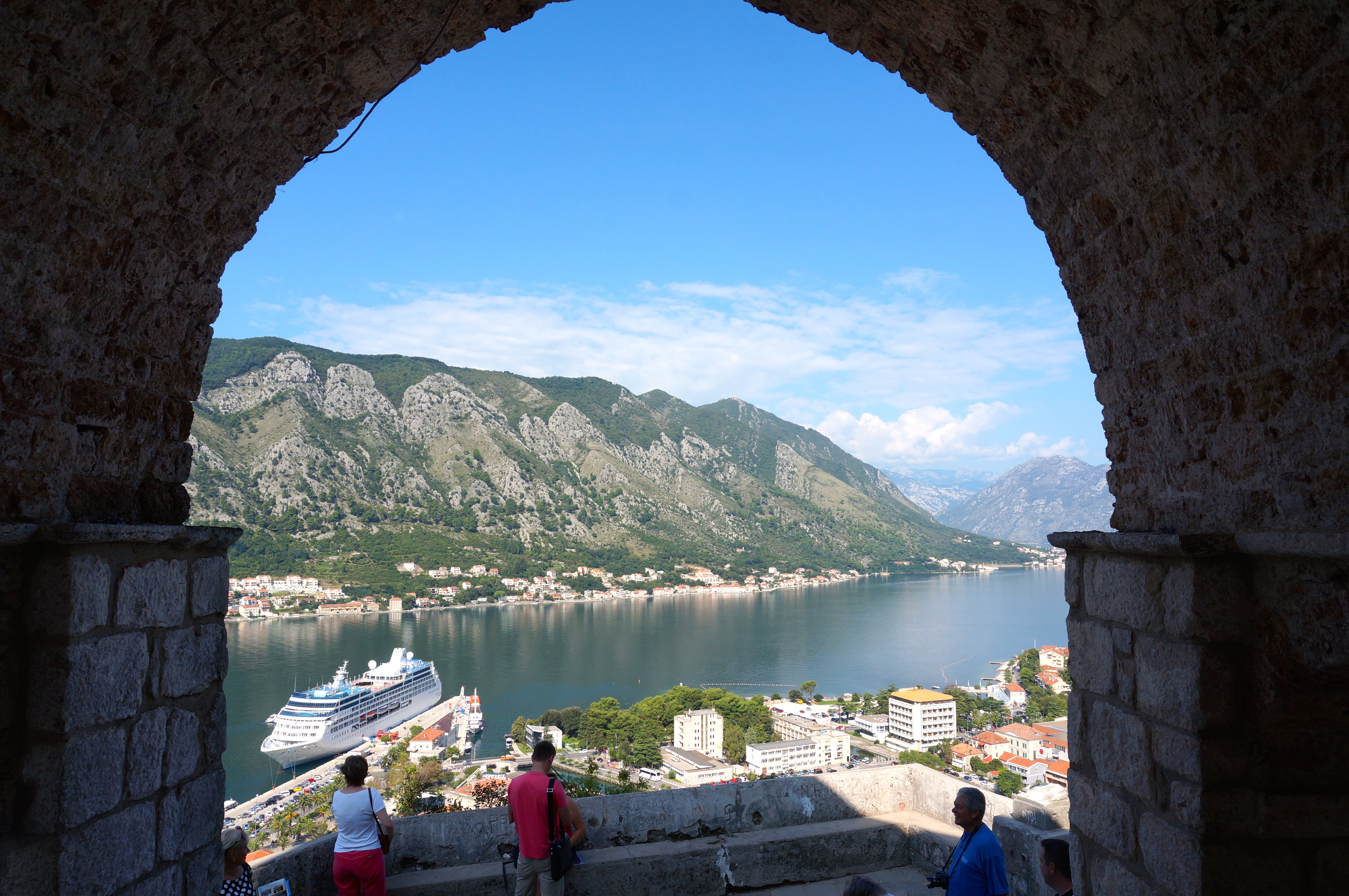
It’s much like travelling through a fjord, but the journey by cruise ship from the Adriatic Sea to the fortified town of Kotor in Montenegro, involves travelling through a ria, or submerged river canyon.

Kotor was one of the most fascinating places we visited last year on our trip to Europe. The old town, surrounded by its high walls and moat, dates back to the middle ages and the history is almost overwhelming as you walk along the cobbled streets and see buildings from the days when the Venetians ruled the town, still being used.

DSC01798It is one of those places where you can become so engrossed in what surrounds you that you can almost forget that there’s still much more to see.

Almost. Every now and then your eye catches sight of something between buildings that makes you realise there’s something above you need to discover.

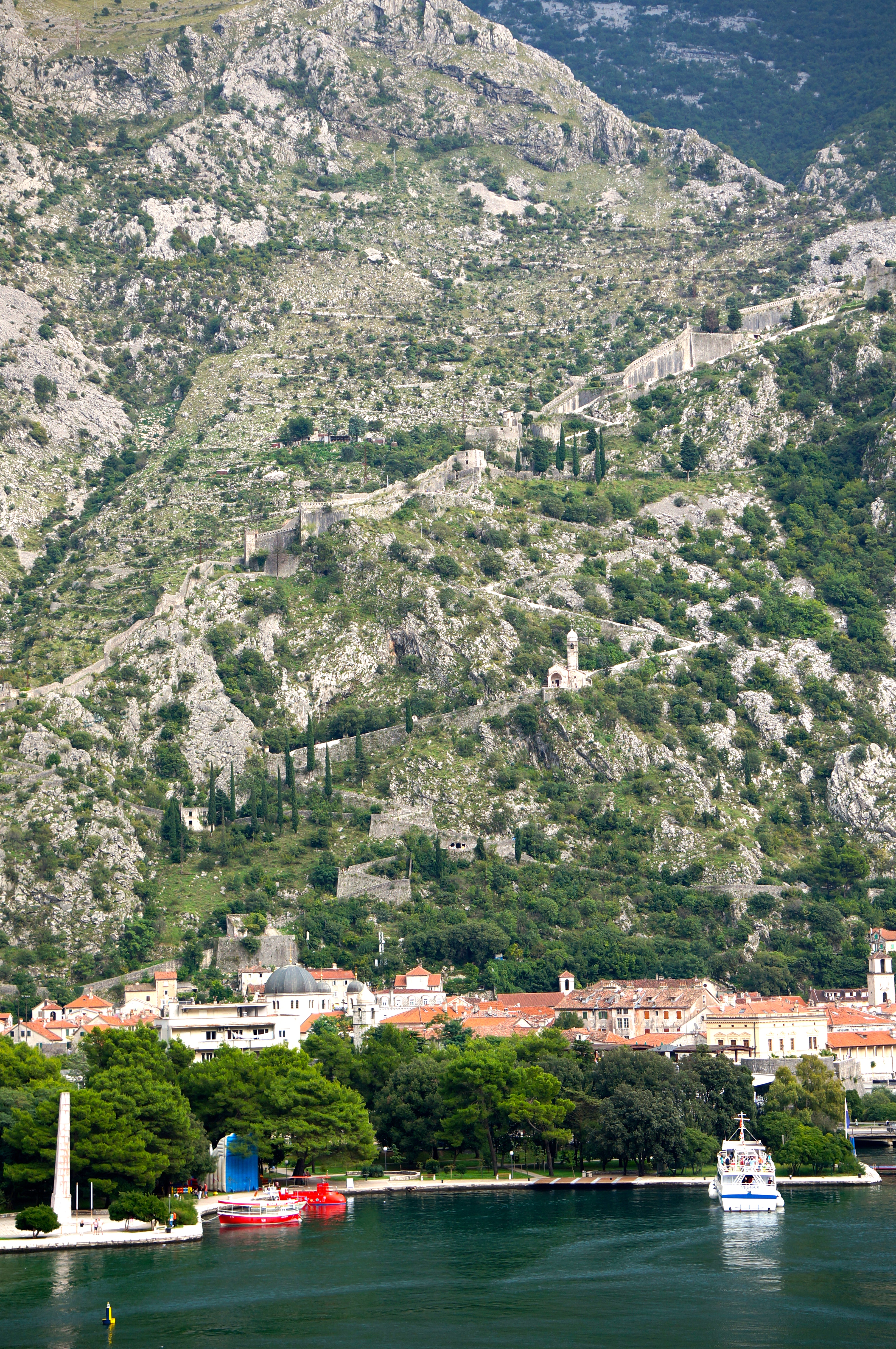
It’s not just the massive mountain that looms high over the town that beckons, but your eyes are drawn to the ancient city wall that climbs a distance of 4.5km up almost vertical cliff face. You also catch a glimpse of a tiny building halfway up the mountainside and you can’t help but wonder what lies beyond this ancient town.

DSC01815The path upwards is long and winding and half-way up you come across the building you saw from below. It’s the Church of Our Lady of Health and from the steps at the front of the church you can look back at the incredible scenery that surrounds Kotor. The picture at the top of this post is my evidence that I made it to the church.

However, I was still only halfway up. Look up from the church and you can see the mountain path stretching further upwards to St John’s Fortress.

Often my eyes are focussed on what is happening around me. The day to day world of business that crowds in and takes all my attention. Then I get a glimpse of something higher. It’s the realisation that the world is bigger than the day to day, and that God has greater plans for my life.

It’s in those momDSC01834ents that I realise that I can climb higher, and as I meditate on the goodness of God I am overwhelmed by his love and grace and the matters that seem so pressing fall into perspective. I am only part of the bigger picture, but despite my insignificance I am assured that God loves me with a love that is so much deeper, so much greater than anything I can imagine.

The great mountain that surrounds Kotor is a reminder to me of the need to keep looking up. The sights that surround me at ground level are tempting and enjoyable, but their real beauty and worth comes into perspective as I look upward to God and experience afresh his mercy and grace.

The Apostle Paul put it well in the good book: And I pray that you, being rooted and established in love,  may have power, together with all the Lord’s holy people, to grasp how wide and long and high and deep is the love of Christ, and to know this love that surpasses knowledge—that you may be filled to the measure of all the fullness of God.

Keep Looking Up!

DSC01091Lake Melissani is situated in a cave on the island of Kefalonia in the Ionian Sea. We had the privilege of visiting this amazing lake during our trip to Europe last year and I took this photograph in the spot where sunlight shines through the collapsed roof of the cave.

The cave is 36metres high, 40metres wide and 3.5 metres long and the lake itself is 20-30 metres deep. Excavations carried out in 1951 and later in 1962 unearthed many artifacts dating back to the 3rd and 4th century BC including evidence that worship of the God Pan was carried out in the vicinity of the lake.
In addition to the interesting historical and mythical links, the lake also has significant hydrogeological significance. It consists of a mixture of brackish groundwater and sea water that is sucked in on the western side of the island and is ultimately expelled into the ocean 50 metres away on the eastern side of the island.
As you sit in a small rowboat, the oarsman sings the myths of Melissani in a strong baritone voice, pausing from time to time to explain the history and structure of the cave and the lake. Floating atop the deep blue water it’s hard to imagine the depth of the water below, and the stream that intersects with the lake as it traces its way under the island.
I’d like to think my life is one that runs deep, connected to the stream of the Holy Spirit and drawing on the power and vitality of Creator God. I’d like to think that the people who come in contact with me could be buoyed up by the knowledge that the deep springs I draw on give confidence and hope to their lives.
More than anything my desire is to help others connect with the deep waters that come from a full and satisfying relationship with Jesus Christ.
The promise in God’s Word is  … Observe the commands of the Lord your God, walking in obedience to him and revering him. For the Lord your God is bringing you into a good land—a land with brooks, streams, and deep springs gushing out into the valleys and hills …

roadkillThose who have driven on roads in the north west of Western Australia are familiar with Wedge-tailed Eagles sitting on the roadside eating roadkill. It’s not a pretty picture for a bird that looks so regal when it is high up in the sky, it’s great wings spread out majestically.

This morning I shared at church the verse in Isaiah 40 that reads: Even youths grow tired and weary, and young men stumble and fall; but those who hope in the Lord will renew their strength. They will soar on wings like eagles; they will run and not grow weary, they will walk and not be faint.

I can relate to the idea of God lifting me above the troubles of the world and delighting in Him through prayer, meditation and worship, but I can also relate to sitting on the ground eating roadkill. It seems that while I want to soar like an eagle, I spend more time grovelling in my own worries and fears.

EagleswingsSo how do we get to soar like eagles? Well, eagles don’t just sit back hoping. They actively chase the thermals – updrafts of warm air – and as they follow the various air currents they are able to fly long distances using little energy.

Isaiah says that those who hope in the Lord (or, wait with anticipation) will renew their strength and soar on wings like eagles. It takes an act of the will to actively seek God and to delight in him through prayer, worship and meditation. When we’re not doing that, we just may be on the side of the road, eating roadkill and dodging passing cars.

I know where I’d prefer to be.

(You can hear this morning’s message online. Click here)

MagpiesI was watching a group of magpies eating the other day. It’s that time of the year that the baby Magpies are demanding a feed. They squawk very loudly until their parents come and feed them.

The interesting thing I noted was that the parent will often have something to eat themselves before taking food to the baby.  It seems a bit selfish, but I think there’s method in their madness. It’s a bit like the instructions you get on a plane. At the beginning of a trip, safety instructions are provided and you’re told that if you have children put your own oxygen mask on before you put one on your child.

The principle is simple. If you’re not safe yourself, you’re not in a position to make your child safe. Magpies have worked that one out.

Counsellors, too, are very much aware that if they are going to be effective in helping people, they have to look after their own mental health first.

Some people are naturally very caring and want to help people who they see are in need, but at times they put themselves at risk in the process of helping others. While we need to care for others we also need to care for ourselves.

There’s a few ways we can do that. We need to look after ourselves physically, to make sure we eat properly, have proper exercise and not to over-indulge. We need to protect our relationships and we need to guard our time to make sure that there’s a balance between the amount of time we put into work, to family, and to what we may call self-care.

But the other area that often gets forgotten is looking after our spiritual health. Human beings are spiritual beings. Most parents want their children to grow up as healthy, well-balanced adults, and many parents are aware of the need of some kind of spiritual stability for their children.

But it’s easy to neglect your own spiritual health, while you worry about your children or another member of the family or a friend, who is in difficulty.  Spiritual practices like prayer, meditation and worship are important and help to build spiritual health.

But sometimes people think that this is enough of itself. God created people with the need to live in relationship with him. And good spiritual health is most achievable when we live in a healthy relationship with God. The Bible tells us that God loved us so much that he came to this earth himself in the form of a human being, Jesus Christ, and he gave up his life for us.

Jesus invites us to come to him, to admit our faults and failings, and accept his gracious offer of love and forgiveness. Find a quiet time to step aside from everything else that’s happening and have that conversation with God.

Being right with God puts you in a stronger position to be in a good place with yourself. It helps you to get a better perspective on where you fit in the world, and who you are as a person.

But it also puts you in a stronger position to support other people, to be a good role model and to have the spiritual strength to help others to grow as well. Check out the magpies next time you see them feeding their young. And remember if you’re going to be any good for anyone else, you need to look after yourself physically, emotionally and spiritually.

IMG_0453We’ve just had the carpet cleaners in to shampoo the carpets and clean the chairs in the church. It was a pretty big job and took quite a while.

I think there’s something therapeutic about the deep washing of carpets because as you go, you throw out buckets and buckets of mud and grime that have accumulated over time. Then when you think you’ve finished and go over it again, there’s still more.

Yet, before you do that you can walk over the carpet on a regular basis and not even be aware of the dirt that has been ground in to it. The carpet doesn’t necessarily look all that dirty, but the process of cleaning drags that dirt out and the buckets of muddy water that are thrown out are evidence that the carpets were probably dirtier than you thought.

We proceed through life every day, and we’re generally not aware of the dirt that accumulates in our life. I’m not talking about the dirt we get on our hands and feet, but the dirt that accumulates on our minds and in our very being.

As we watch television shows about crime and violence year after year, we become a little bit immune to it. Things that may have shocked us a few years ago don’t shock us any more. We enjoy relaxing in front of the TV to see comedians or to watch comedy, but over time discover that we laugh at things that once we thought were crude or inappropriate.

Little bits of dirt have accumulated on our minds, and we’re not aware that its there, But it builds up bit by bit and over time we don’t notice that we’re a little bit grubbier than we were before.

There was a time when you avoided people who told dirty jokes, you were more careful in the way you drove your car, you were less judgmental of people who were different to you.  Now, of course, you’re older and wiser, more tolerant, but somehow when you look back you realise there has been some slippage. Little bits of dirt have accumulated, and you haven’t noticed it.

In fact, somewhere in the Bible it says: All of us have become like one who is unclean, and all our righteous acts are like filthy rags; we all shrivel up like a leaf, and like the wind our sins sweep us away.  Now, you may think that’s a bit steep. After all, we like to think we’re basically good people.

But the reality is, the bits of dirt and grime we accumulate in our minds and hearts actually builds up into something quite disgusting when we compare ourselves with the purity, and beauty and holiness of an almighty God.

But there’s a solution. You can walk over carpet for years and put off the day you have to bring in the cleaners because you’re not prepared to admit how bad the carpet really is.  Same thing goes for our lives. The Bible also says that if we confess our sins … that means we actually admit that we’re sinners, God is faithful and just and will forgive us our sins and purify us from all unrighteousness.

Sometimes we have to admit that even though we vacuum the carpet regularly, we still need to bring in the carpet cleaners to do a proper job. We may assume we’re basically good people, but there comes a time when we have to admit that compared to God we’re nowhere near perfect.

If we’re prepared to confess our sin, and admit our need of God, he’s assured us he’ll hear that prayer and put us right with himself.

hensWe had our grandchildren staying with us over the holidays. One day we were out the front of our house and our neighbours drove up, stopped and wound down the window.

They acknowledged our three year old grandson and, as you’d expect, he was a little wary of this stranger stopping to talk to him. Instinctively he put out one arm, protecting his little sister who was just behind him.

I was amazed at this response of protection from a three year old. But I guess I shouldn’t have been surprised. Because we’ve all been made in the image of God, and it’s in God’s nature to be protective of those he loves.

The apostle Paul has a great description on love in one of his letters, and it says in part: Love does not delight in evil but rejoices with the truth. It always protects, always trusts,  always hopes, always perseveres. Love never fails.

Some people struggle with the idea of God as father because experiences with their own father hasn’t been good. If that’s the case you may find some comfort from verses like these that show the protective nature of God.

The prophet Isaiah quoted God as saying: “I will extend peace to her like a river, and the wealth of nations like a flooding stream; you will nurse and be carried on her arm and dandled on her knees. As a mother comforts her child, so will I comfort you; and you will be comforted over Jerusalem.”

Isaiah also quoted God in this way: Shout for joy, you heavens; rejoice, you earth; burst into song, you mountains! For the Lord comforts his people and will have compassion on his afflicted ones. But Zion said, “The Lord has forsaken me, the Lord has forgotten me. Can a mother forget the baby at her breast and have no compassion on the child she has borne? Though she may forget, I will not forget you!”

Here’s one that draws on the image of a mother eagle (Deuteronomy 32): In a desert land he found him, in a barren and howling waste. He shielded him and cared for him; he guarded him as the apple of his eye, like an eagle that stirs up its nest and hovers over its young, that spreads its wings to catch them and carries them aloft. The Lord alone led him.

Jesus himself said: “Jerusalem, Jerusalem, you who kill the prophets and stone those sent to you, how often I have longed to gather your children together, as a hen gathers her chicks under her wings, and you were not willing.

What a great picture this is of a God who cares so much about those he loves. You can see the mother hen trying to get all her chickens together but some of them are running off in the opposite direction. How frustrating it is to try and keep them altogether.

And that’s just what Jesus is saying. His goal is to protect and draw people to himself, but more often than not, our independent nature comes into play and we resist God’s love.

If a three year old can protect his little sister, how much more will almighty God protect those he loves. And how crazy it is when we don’t accept that love and allow God to protect us.

There’s an article in today’s West entitled, “Is the Age of McDonald’s Over?“. The article says that McDonalds market share in the US has been shrinking over the last few years and stocks have fallen about 6% in the last six months.

“On every fundamental metric, things have been really bad for McDonald’s,” says Yahoo Finance’s Jeff Macke.

This could be because of temporary PR problems but “if you put it in the context of every other fast food operator and the price of gas, these are tailwinds that a fast food operation can’t afford to ignore.”

The article points says that in the US McDonald’s has unveiled a new marketing plan in an effort to address falling sales:

In order to appeal to those who want healthy, fresh food, McDonald’s will allow for an increase in local autonomy. That means that chain owners will be allowed to give menus more of a regional flair.

Nationally, McDonald’s will work to simplify its menu and introduce the “Create Your Taste” initiative, which allows customers to personalize their burgers.

A redesign is also in store for the fast-food behemoth. The company unveiled new minimalist bags and changed their slogan from “I’m lovin’ it” to “Lovin’ is Greater than Hating.”

Also in store? An ad campaign that focuses on transparency and an increase in customer interaction. “We’re moving from a philosophy of, ‘billions served’ to ‘billions heard,'” says an official McDonald’s statement.

indexI have just concluded reading “Slow Church” by C Christopher Smith and John Pattison where they address the “McDonaldisation” of the church, so the article about McDonald’s rang a bell for me, particularly in the light of the recent collapse of Mars Hill Church in Seattle. A year ago Mars Hill had an average weekly attendance of 12,329 in 15 locations and fitted Smith and Pattison’s description of a “McDonaldised” church.  Following controversy around their founding pastor, Mark Driscoll and a massive decline in attendances, the church merged three of its Seattle locations, cut 30–40% of its staff to deal with decreases in giving, then announced plans to dissolve the church’s 13 remaining campuses into autonomous entities, with the option of continuing, merging with other congregations, or disbanding.

Could it be, I ask myself, that the franchise-style megachurch is bumping up against the same issues that McDonalds itself is experiencing. Could it be that it’s time for us all to slow down and look at some different approaches to church? Smith and Pattison put it this way:

If McDonalised church makes the case for increased efficiency, calculability, predictability and control, Slow Church makes the case for taste – specifically the case for the taste of the place, and for taste and see that the Lord is good (Ps.34:8). Taste is the most intimate of the five senses.

It goes on…

Tasting God’s goodness and costly discipleship go hand in hand. As we follow Jesus we experience in new ways the complex palate of God’s goodness. Similarly, since the church is the body of Christ, it is partly through the church that the world tastes God. This is why Slow church refuses to sacrifice quality to quantity. When efficiency, calculability, predictability and control become the primary standards by which we evaluate our life in our churches, it’s easy to justify cookie-cutter approaches to disciple making. Churches churn out Christians notable not for their authentic peculiarity but for their bland sameness. The final standard needs to be faithfulness.

The latest news about McDonalds on top of the news about Mars Hill Church is a timely warning to the church to look seriously at what it is doing and slow down. Perhaps if we did that we may get to enjoy the ride. Check out this video: