ImageWhen I travel down the six lane highway that is Great Eastern Highway, leading from the Perth airport into Perth City, Western  Australia, it is hard to remember the roadworks that disrupted the highway for many months while it was being redeveloped. But back then it was hard for people to imagine what the highway was going to look like, and there were plenty of complaints at the time about the disruptions to traffic, the cost to business in the area and the general frustration of having to negotiate multiple signs and detours that controlled where and how we could travel.

When I read the Old Testament sometimes it seems confusing, excessively detailed, and often frustrating. But perhaps it is useful to see the events of the Old Testament as roadworks in progress.  God had a master plan to bring his Kingdom to earth through Jesus and everything that occurred leading up to Jesus was a major worksite preparing the way for what was to come.

The Great Eastern Highway redevelopment required a lot of detailed work. With extensive services, including water, power and gas, running underground, no work could be carried out without careful planning and preparation to ensure that the job was done well and the final outcome could be achieved successfully. In the same way, the detailed preparation that we see in the Old Testament was part of the blueprint that was necessary for God to achieve his purposes for humanity.

Take, for example, the details that were given in relation to the building of the Tabernacle. There were instructions about the materials that were used, the colours, sizes and shapes. We may well scratch our head over the level of detail, but the writer to the Hebrews describes this as a copy or shadow (perhaps a blueprint) of what was to come.

The Hebrews writer said: “But in fact the ministry Jesus has received is as superior to theirs as the covenant of which he is mediator is superior to the old one, since the new covenant is established on better promises.” If the final outcome of the roadworks is superior, the preparation and planning – the roadworks – had to be carried out with detail and care.

For me, it’s helpful reading the Old Testament as a major roadworks exercise. Everything was done for a reason and while the detour signs may not always make sense, they were part of Gods’ blueprint for the future – every part of it pointing to Jesus.

Does this illustration help in your understanding of the Old Testament?

Whose Kingdom?

Posted: August 5, 2013 in Uncategorized
Tags: , ,

ImageWell, the election has been called and we have just a month to make up our minds who to vote for in the September 7 Federal election.

So, how do we decide?

The ABC have got off on the front foot by making available a website called Vote Compass where you can answer some questions and you will be told how close your views sit in relation to the three major parties, the ALP. NLP and Greens.

I did the questionnaire and was provided with a pretty graph that probably confirmed my views on various policies, but didn’t necessarily help me to know which way to vote. The problem was that it insinuated that because I had certain points of view, the party that fitted closest to those views would be the party I would vote for. There was no consideration of the fact that I may want to vote for a local member rather than the party leader, or that I may have some other criteria that would help me make a decision.

Yesterday my Friend Andrew Hamilton posted under the heading of Flat Beer or Stale Bread and suggested another way of addressing the issue, that is more thoughtful than simply using an online survey.

Hamo says there is one theological lens through which we can look to assess the merits of the different political parties:

That lens I believe we need to look thru if we are vote according to the priorities of Jesus is the lens of the Kingdom of God. The Bible wasn’t written with 21st century western democracy in mind.  Nor was it written for first century imperialism. None of these human forms of government are to be seen as what God ultimately hopes for. They are our best attempts to keep a world in order and keep a society healthy and functioning.

Hamo says that if we are envisaging a world formed by God’s rule then we will ask questions like:

  • who best looks after the poor and needy both here and around the world?
  • who will best work to develop a righteous and moral society?
  • who is truthful and honourable in the way they lead?
  • who best calls us and envisions a way to look after the created world?
  • who will best uphold the values of a just and fair society and foster healthy relationships between people?
  •  who will promote strong family as core to the health of a society
  • who will see human rights as a central issue
  • who will protect the rights of the powerless
  •  who will seek peace and healing as ways of resolving conflict and who will avoid war and bloodshed?

We may have other criteria that we would want to add, but I think this is a useful starting point to help us in our decision. The point is that while we may say that religion and politics shouldn’t mix, the reality is that if our faith means anything it should help us in making decisions about how we vote, as much as it helps us in making decisions about our relationships, our career, our church, or our family.

Jesus’ advice was to seek first the Kingdom of God and his righteousness. I think that is our starting point.

Probably, my favourite genre of literature is biography. My bookshelf (and more recently, my Kindle-shelf) contains a wide range of biographies on politicians, musicians, missionaries, business people, and even sportspeople.

My current read is Bono On Bono: Conversations With Michka Assayas, a book that has been around a few years, but provides a very honest and revealing insight into the life of Bono, the lead singer of U2, described as one of the most influential musicians at work today. For those who are unaware, Bono’s band, U2, have sold a staggering 130 million albums and collected 14 Grammys in the last 25 years.

ImageHere’s some thoughts from Bono that are in line with some of the things I was saying in church yesterday:

Michka: The Son of God who takes away the sins of the world. I wish I could believe in that.

Bono: But I love the idea of the Sacrificial Lamb. I love the idea that God says: Look, you cretins, there are certain results to the way we are, to selfishness, and there’s a mortality as part of your very sinful nature, and, let’s face it, you’re not living a very good life, are you? There are consequences to actions. The point of the death of Christ is that Christ took on the sins of the world, so that what we put out did not come back to us, and that our sinful nature does not reap the obvious death. That’s the point. It should keep us humbled . It’s not our own good works that get us through the gates of heaven.

Michka: That’s a great idea, no denying it. Such great hope is wonderful, even though it’s close to lunacy, in my view. Christ has his rank among the world’s great thinkers. But Son of God, isn’t that farfetched?

Bono: No, it’s not farfetched to me. Look, the secular response to the Christ story always goes like this: he was a great prophet, obviously a very interesting guy, had a lot to say along the lines of other great prophets, be they Elijah, Muhammad, Buddha, or Confucius. But actually Christ doesn’t allow you that. He doesn’t let you off that hook. Christ says: No. I’m not saying I’m a teacher, don’t call me teacher. I’m not saying I’m a prophet. I’m saying: “I’m the Messiah.” I’m saying: “I am God incarnate.” And people say: No, no, please, just be a prophet. A prophet, we can take. You’re a bit eccentric. We’ve had John the Baptist eating locusts and wild honey, we can handle that. But don’t mention the “M” word! Because, you know, we’re gonna have to crucify you.

And he goes: No, no. I know you’re expecting me to come back with an army, and set you free from these creeps, but actually I am the Messiah. At this point, everyone starts staring at their shoes, and says: Oh, my God, he’s gonna keep saying this. So what you’re left with is: either Christ was who He said He was the Messiah or a complete nutcase. I mean, we’re talking nutcase on the level of Charles Manson. This man was like some of the people we’ve been talking about earlier. This man was strapping himself to a bomb, and had “King of the Jews” on his head, and, as they were putting him up on the Cross, was going: OK, martyrdom, here we go. Bring on the pain! I can take it. I’m not joking here. The idea that the entire course of civilization for over half of the globe could have its fate changed and turned upside-down by a nutcase, for me, that’s farfetched

If only we could be a bit more like Him, the world would be transformed. When I look at the Cross of Christ, what I see up there is all my s— and everybody else’s. So I ask myself a question a lot of people have asked: Who is this man? And was He who He said He was, or was He just a religious nut? And there it is, and that’s the question. And no one can talk you into it or out of it.

On Having a Point of View

Posted: July 22, 2013 in Uncategorized

On an average day everyone seems to be trying to convince me to make a commitment to a particular brand. It’s either Apple or Samsung, MacDonalds or KFC, Ford or Holden, SGIO or Bupa, Eagles or Dockers.

On a religious level there seem to be as many brand expectations: Baptist or Anglican, Calvinist or Arminian, Fundamentalist or Liberal, Pro Choice or Pro Life, Creationist or Evolutionist.  

And the lists go on…

I was sharing at church on Sunday about paradox and my view that in life we don’t always have to make a choice between one extreme or another. On many occasions it is quite alright to accept there are two points of view and that they are both valid in their own way.

That is not to say that we can avoid making a decision and happily sit on the fence on everything. Rather, I think there is a place for us to investigate and study the options, come  to the place where we understand the differences, then hold both sides together.

The healthy approach is when we come to a viewpoint of our own, but are still prepared to hear the other side and allow someone else the right to argue and defend their point of view, without animosity.

I’m convinced that Jesus is the only way by which we can find peace with God. However, I  know there are many people who figure there are other ways to know God, and some who don’t even believe there is a god.

As a Baptist, one of our fundamental beliefs is the freedom of religion – that is the right of everyone to practice the religion of one’s choice or no religion at all. This means that not only should I listen to what someone else says and respect their right to believe what they believe, but I will also defend their right to have that belief.

And since I am prepared to defend a person’s right to believe what they have chosen, I deserve the right to share my viewpoint with them.

It’s interesting that in a free country we are increasingly being told that we are being discriminatory if we express our viewpoints.

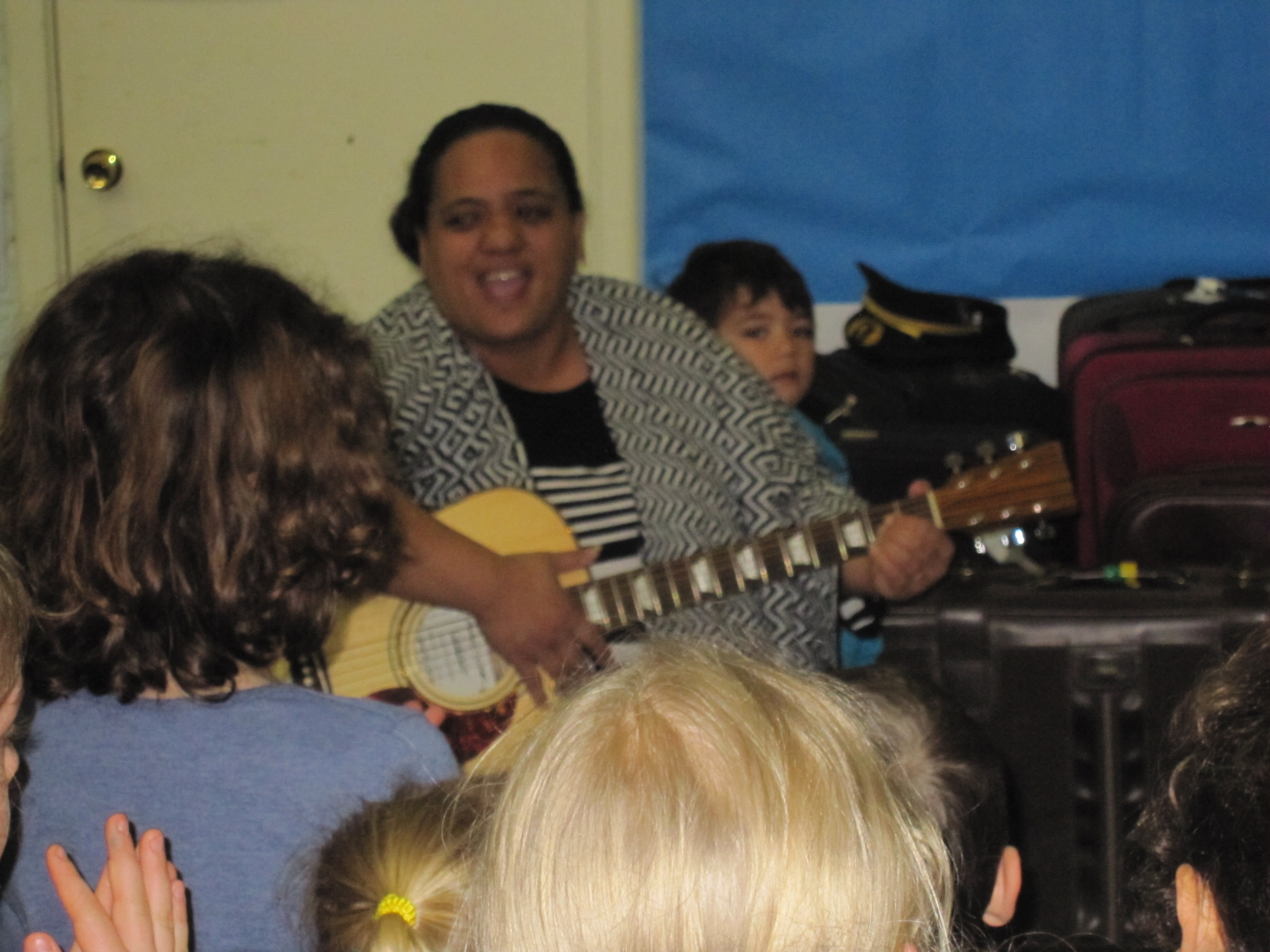
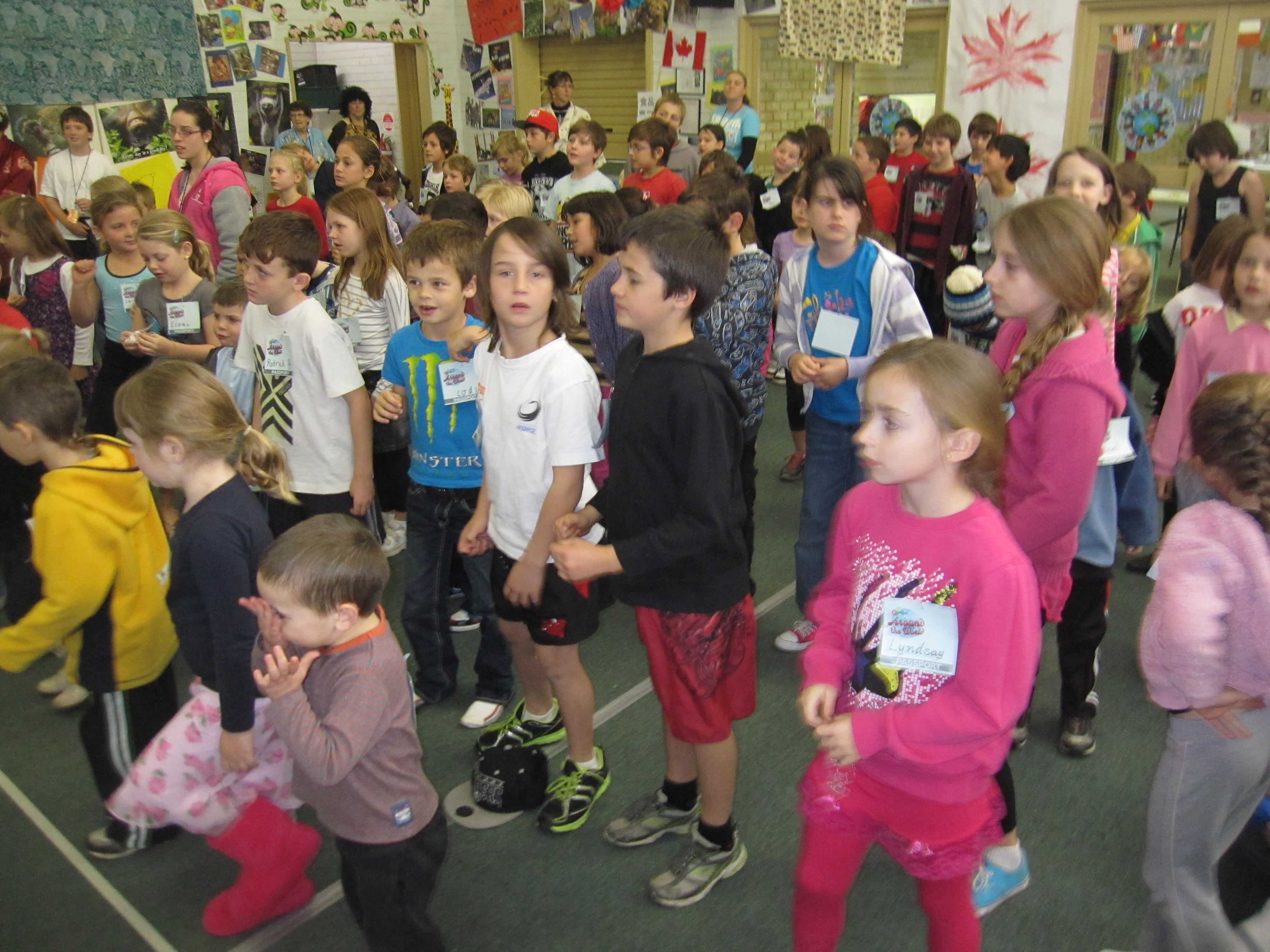
Here’s the video of last week’s amazing Fun Factory at Maida Vale Baptist Church, High Wycombe, Western Australia.

We had an average of 100 children each day and visitors included Akwaaba African drummers, Maori dancers, Operation Christmas Child and children’s entertainer, Sean W. Smith.

For three hours each day the children participated in games, activities, craft, singing, and Bible stories. The theme was Around the World, so each day we focussed on a different country, highlighting Africa, Japan, Mexico, New Zealand, and Canada.

Sean W. Smith concluded the week with a concert, bringing us many of his favourite compositions.

Thanks to the many volunteers from the church who contributed to the success of the week’s events.

Enjoy the video.

Video  —  Posted: July 14, 2013 in Uncategorized
Tags: , , ,

It was our fourth day at Fun Factory today – still over a hundred kids and having a great time, though the leaders are all getting a little bit tired-er every day.

Our theme was New Zealand today, so in addition to the kiwi-themed stories, crafts and games, we had a visit from some Maori people who taught some new skills. There were some great efforts at Poi spinning and the boys all had us in fear with their rendition of the Haka.

Tomorrow is Canada day, but the highlight of the day will be the concert with Sean W. Smith.

Image

Image

How do you feed hamburgers to 117 kids? Well, it take a lot of planning, good management, and a very long line. That was our third day at Fun Factory.

Our theme for the day was Mexico and there was no shortage of senoritas, senoras and senors, along with a visit from Yvonne and Robin from Operation Christmas Child, telling us about the annual shoe box appeal, and particularly telling us a story about a boy in Mexico whose life was changed when he received a Christmas box.

It was a great day with a great bunch of kids.  We’re off to New Zealand tomorrow. Image

Fun Factory Day Two

Posted: July 9, 2013 in Uncategorized
Tags: , ,

ImageOn Day Two of Fun Factory Around the World we had 103 children turn up for our focus on Japan.

Thanks to Rebekah Hunter who drew caricatures of the children in the Japanese style.

Tomorrow we are off to Mexico.

IMG_3770

IMG_3754What happens when you put more than 80 children in the same room as nearly 100 African drums? Bedlam? Surprisingly, the result is an amazing sense of unity.

On the first day of Fun Factory, Maida Vale Baptist Church’s annual holiday club, we put it to the test. Akwaaba, the local African drumming team came along and gave us half an hour’s incredible drumming. Instead of bedlam the children quickly got the beat and played along together.

IMG_3751


The theme for Fun Factory this year is Around the World, so tomorrow we’re off to Japan. Looking forward to another great day.

It’s probably a bit self-indulgent, but after reading many recollections on a Facebook site “I Remember Kalgoorlie When…” , I decided to put together a summary of some of the stories that I covered in two decades of journalism from 1973-1993. Fortunately, I kept files of many of my stories and photographs through these decades. It was interesting to go back and see names and events that brought back memories, but I realised after putting together some of the highlights that it actually represented a valuable historical journey through two decades of regional journalism. During that time I reported in the Goldfields, Kimberley and Gascoyne regions of Western Australia and interviewed some fascinating people. Have a look at it here, and enjoy the journey.