The Gift of a Word

Posted: February 16, 2014 in Uncategorized
Tags: , , , ,

This week I met with a Noongar elder to share the details of a forthcoming book that, in part, will chronicle our shared stories. Myrtle Yarran and I talked about a time more than 70 years ago when her father and mine first met at the little wheatbelt railway siding of Badjaling. Here’s what I read to her:

It had been a tiring day for Bob Mead. He had been fox hunting all day and was walking along a dusty road towards his home at Badjaling. Foxes were an introduced species, and they caused a lot of trouble to the farmers who worked in the area, so Bob found some satisfaction in proving his hunting skills and at the same time collecting a small payment from the white farmers who hired him. The Nyungar people were barely recognised by the farmers, but they were considered useful when it came to getting rid of pests like foxes.

As he made his way to Badjaling, with a bundle of fox carcasses dragging behind him, Bob spotted the new school teacher. He was a young man, only twenty-one years of age, but already going bald at the front. They chatted for a while about the fox hunting expedition, then, with a twinkle in his eye the Nyungar elder said: “Mr Douglas, say ngangk!” The young Irishman had been told that the Badjaling people only spoke English; this was his first realisation that while English was used widely, there was something about these people that he had yet to learn.

His first attempt at repeating the word Bob had asked him to say wasn’t too successful, so Bob called over his seven-year-old son Aubrey, one of the thirty-eight children who attended the tiny corrugated iron school now in the hands of this young teacher. Aubrey screwed up his nose and said, “ngangk.” The teacher screwed up his nose and tried again to repeat the word.

“When you can say that word, I’ll teach you another one,” Bob said. “Ngangk is our Nyungar word for mother, and it’s also the word for the sun in the sky because the sun is the mother of us all.” Wilf Douglas had received his first lesson in both the Nyungar language and traditional Nyungar beliefs.

When my Dad received the gift of that first word from Myrtle’s Dad, few people had ever written the Noongar language. He took that gift with appreciation and over many years wrote down and described the language, giving it back to the custodians of that language in a format that would help preserve it forever.

Each day we receive gifts from the people around us – a kind word, a shared story, an expression of concern or love. When someone shares a word, don’t brush it off or disregard what was said. Receive it as a gift. These are blessings that represent something of the person who has made the gift, but they are not gifts for us to hold for ourselves. As we receive them we have a responsibility to consider how we can return them with an added blessing.

It’s Facebook BC450

Posted: February 9, 2014 in Uncategorized
Tags: , ,

ImageI think I’ve come across one of the earliest examples of social media. Nehemiah was a governor in Persia when he asked permission to return to his cultural home of Jerusalem and rebuild the walls. He was doing pretty well, but there was a small group of men who were opposed to what he was doing and were trying to distract him.

It sounds like Facebook BC450 when Sanballat and Geshem sent out an unsealed letter making all sorts of accusations against Nehemiah. Being unsealed meant that as the letter was passed along, anyone who wanted could read it and spread the news they read.

The letter commenced with the words: It is reported among the nations and Geshem says it is true – two phrases that are repeated regularly in the 21st century:

“It is reported among the nations” – or more commonly, “everybody is saying it” and “Geshem says it is true”, more commonly paraphrased “If it’s on Facebook then it must be true.”

Gossip may have been around for the last 2500 years or more but it’s taken on a fresh form in the world of social media. At church this morning I talked about this and prayed that we fix our eyes on Jesus and allow Jesus to guard our ears, control our fingers, direct our tongue, and protect our mind.

… Many come into Christian faith with great expectations. They have heard stories of jubilation and salvation, of the power to overcome this world and experience the divine in expressible ways. But once inside the ancient halls of Christianity many are disappointed. Where is the light, where is the illumination? Our hearts seek God and the goodness, beauty, justice and peace we’ve been told he provides, but he often remains hidden behind the shadow cast by an evil world …”

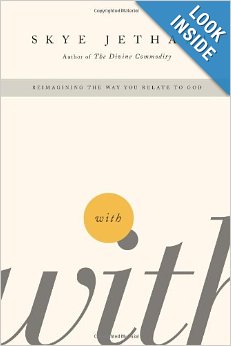
With these words, Skye Jethani launches a brilliant discussion about what has hindered real communion with God, making use of the prepositions, under, over, from, for and with. My holiday reading has included “With – Reimagining the Way You Relate to God”.

ImageJethani talks about four forms of religion that he describes as variations of fear and control, life under God, life over God, life from God and life for God, then introduces a different vision: Life with God. In each of the first four areas, we seek to use God to achieve some other goal.

Life over God uses God as the source of rational principles or laws and ultimately breeds atheism, but Jethani says many Christians practice a faith that has little room or need for God. Life over God seeks control by discovering how the world works and then directly implementing the right principles.

Life under God views God as a capricious deity who must be appeased to gain blessings and avoid punishment. Life Under God tries to manipulate God through obedience to secure blessings and avoid calamity. This requires a list of rules and rituals which, if we follow, will result in God’s approval. Jethani describes this as potent mix of pagan superstition and biblical morality.

Life from God allows us to have our desires granted and is evidenced in the way we try to make God like us, assigning him our personalities, our values, and our biases. Those who follow the Life from God approach are primarily focussed on achieving their own happiness. This is evident in our current consumer thinking and the way consumerism has entered the church environment.  Jethani talks about this type of God as a divine butler, a comic therapist, a holy vending machine.

Life for God uses him and his mission to gain a sense of direction and purpose. For many people the mission of the church has become the most important thing in life, so their whole purpose in life is working for God and doing things for him. This often leads to spiritual burn-out as people come to a place where they find all their work is not achieving any deep sense of satisfaction.

So Jethani comes to his proposal that we should be looking towards a Life With God. For many people, Life With God is difficult to find because people who have tried to live over, under, from and for God, have no reference point from which to start. They cannot imagine what Life With God looks like.  Life With God is so far beyond our imagination that it must be revealed to us.

Jethani goes on to say that Jesus Christ came to shine a light onto a truth about the cosmos previously hidden from our sight. The Life With God posture is predicated on the view that relationship is at the core of the cosmos: God the Father with God the Son with God the Holy Spirit. And so we should not be surprised to discover that when God desired to restore his broken relationship with people, he sent his Son to dwell with us.

This was an excellent read for the start of the new year. I heartily recommend it.

Here’s a sensational video and a thought for the new year from Ephesians 4:  You were taught, with regard to your former way of life, to put off your old self, which is being corrupted by its deceitful desires; to be made new in the attitude of your minds;and to put on the new self, created to be like God in true righteousness and holiness.

Here’s a beautiful video out of New Zealand, that tells the Christmas story from the point of view of children. You’ll love it. I played it at church yesterday and it was a great introduction to my talk about the unexpected visit of the angels to the shepherds on the outskirts of Bethlehem, announcing the birth of Jesus.

Video  —  Posted: December 22, 2013 in Uncategorized
Tags:

What’s in a Name?

Posted: December 16, 2013 in Uncategorized
Tags: , ,

ImageSometimes people choose their baby’s names because it keeps up a family tradition, sometimes because they know someone else of that name, or perhaps it’s just because it’s a name that sounds good.

It’s not too often in the 21st century that people choose names because of their meaning.  I looked up the meaning of my name. Robert apparently means “bright fame”, but those two words don’t seem to go together, after all, it’s not a sentence and the words don’t describe anything, so I think naming me Robert had more to do with family history than the meaning of the name.

Prior to the birth of Jesus another baby was born, and his parents called him John.  Now that’s a name that has some meaning. At the time of his birth, John meant the Lord is Merciful, or Gracious Gift of God.

There was a bit of a dispute at the time because everyone thought that the baby should be named after his father – don’t you love the way everyone’s got an opinion!  But John’s father, Zechariah, had been told by an angel that his baby was to be called John, and Zechariah had the insight to know that John was going to be the person who would prepare the way for the coming of the Messiah, Jesus.

It’s interesting to me that Jesus didn’t just appear on the scene unannounced, but that his cousin, John, was born before him, with the role of preparing the way. As we prepare for Christmas; buying presents, decorating the Christmas tree, and buying the ham, it’s worth remembering that Jesus didn’t come without preparation, and his arrival was not unexpected.

Ken Duncan has brought us this beautiful Christmas reflection with some of his amazing photographs. Take a look.

Video  —  Posted: December 12, 2013 in Uncategorized

Surprise!

Posted: December 9, 2013 in Uncategorized

Christmas is a time of surprises.Image

We get to open presents that, sometimes, are just what we wanted, and while there may be some predictable presents, it’s always good to get a surprise.

As a child I used to spend a lot of time wrapping presents in such a way that no matter how much you looked at it under the Christmas tree, or felt it or shook it, you still couldn’t guess what it was.

Christmas is a time when families get together and sometimes that produces surprises. Look how much the baby has grown … when did the children turn into teenagers? … Isn’t Aunty May looking old?

There are a whole lot of surprises in the Christmas story as it’s told in the Bible.

It was a massive surprise to a young teenage girl, by the name of Mary when an angel popped into her little village of Nazareth and told her that she would have a child who would be the saviour of the world.

It was one mighty surprise for a group of shepherds in the paddocks outside Bethlehem, when a whole band of angels appeared and told them about the birth of a baby.

The wise men, or astrologers, who travelled from Iran, or even as far as China, would have been very surprised that their search for a king led them to a baby in a manger.

And, to be honest, it’s a huge surprise to me that almighty God, the creator of heaven and earth, should consider little old me worthy of his love, such that he would send his son to earth so that I could be made right with him. 

That’s the message of Christmas, and that’s a surprise that doesn’t need to be disguised by fancy wrapping.


Here’s another great song to get you into the Christmas Spirit!

Video  —  Posted: December 7, 2013 in Uncategorized
Tags: ,

Time to get into the Christmas spirit with some great music from the Piano Guys. I enjoyed this one.

Video  —  Posted: December 5, 2013 in Uncategorized